Your vision can change gradually, and some eye conditions may develop before you notice obvious symptoms. That is why regular comprehensive eye exams are an important part of protecting both your eyesight and overall eye health. The CDC notes that some eye diseases can remain unnoticed in their early stages, while a comprehensive dilated eye exam can help detect problems earlier.
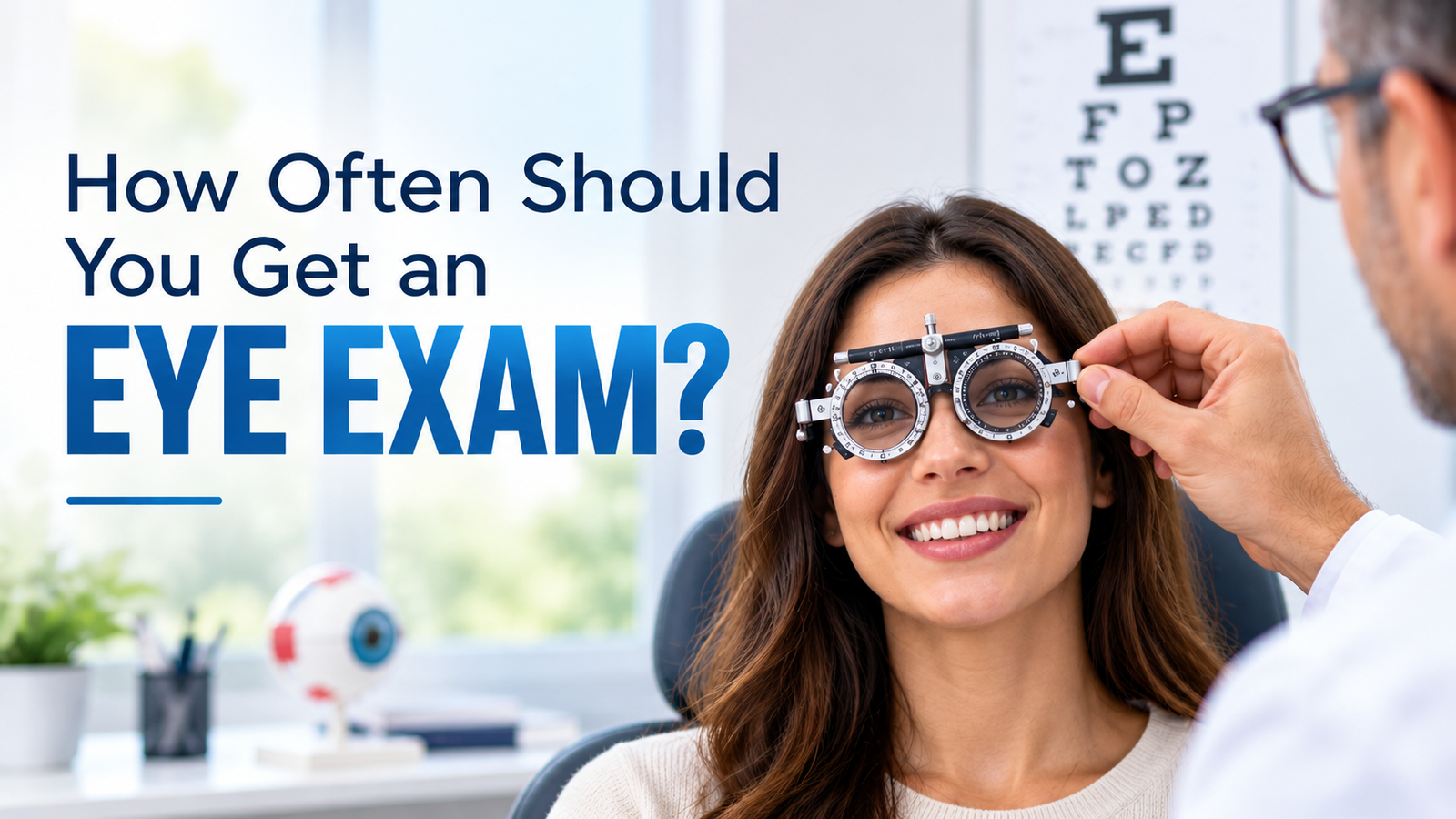
So, how often should you get an eye exam? The answer depends on your age, vision needs, medical history, contact-lens use, family history, and risk factors for eye disease.
For patients looking for an eye exam in Monroe, NY, David Wasserlauf OD, PC provides comprehensive eye exams, vision correction, specialized contact lenses, medical eye care, chronic-disease-related eye care, and pre- and post-surgical care.
How Often Should You Get an Eye Exam?
For adults without symptoms or known risk factors, the American Optometric Association’s published examination-frequency guidance recommends an examination at least every two years for adults ages 18–64 and annually for adults 65 and older. People considered at risk may need examinations at least annually or according to their eye doctor’s recommendations.
A simple starting point is:
| Patient | General Eye Exam Frequency |
|---|---|
| Adults 18–39, low risk | At least every 2 years |
| Adults 40–64, low risk | At least every 2 years |
| Adults 65+ | Annually |
| Higher-risk patients | At least annually or as recommended |
| Contact lens wearers | May require more frequent evaluation |
| People with diabetes | Generally yearly dilated eye exams |
These are general guidelines rather than a personalized medical schedule. Your optometrist may recommend a different interval based on your findings and health history.
Why Are Routine Eye Exams So Important?
A routine eye exam is about more than determining whether you need new glasses.
A comprehensive examination can evaluate how clearly you see, determine whether your prescription has changed, assess your overall eye health, and help identify signs that require monitoring or treatment.
The CDC emphasizes that eye diseases may develop without noticeable symptoms during their early stages. Comprehensive dilated examinations can help detect conditions such as glaucoma, diabetic eye disease, and age-related macular degeneration.
This means feeling that you can “see fine” does not necessarily tell the whole story about your eye health.
How Often Should Adults Get an Eye Exam?
For healthy adults at low risk, an exam at least every two years is a useful general benchmark under AOA guidance. However, your individual eye exam frequency may need to increase as your health, age, prescription, or risk profile changes.
More frequent exams may be appropriate if you:
- Wear contact lenses
- Have diabetes or another health condition that may affect the eyes
- Have a personal or family history of eye disease
- Have had previous eye surgery or an eye injury
- Have a high or changing prescription
- Take medications that may affect your eyes
- Have noticed changes in your vision
- Work in an occupation with significant visual demands or eye hazards
The AOA includes several of these factors among those that can place patients into a higher-risk category.
How Often Should You Get an Eye Exam After Age 40?
Your 40s are an especially important time to pay attention to changes in vision.
Many adults begin noticing more difficulty focusing on nearby objects as they get older. At the same time, age and health history can influence the risk of certain eye conditions.
For low-risk adults ages 40–64, AOA guidance recommends an examination at least every two years, while at-risk patients may need annual or more frequent examinations.
Rather than waiting until your vision becomes uncomfortable, regular examinations provide an opportunity to monitor changes over time.
How Often Should Adults Over 65 Get an Eye Exam?
For adults 65 and older, AOA guidance recommends annual comprehensive eye examinations, even for those considered asymptomatic and low risk.
Age is associated with increased concern for conditions such as cataracts, glaucoma, and age-related macular degeneration. Regular examinations can therefore become increasingly important as you get older.
How Often Should You Have an Eye Exam If You Have Diabetes?
People with diabetes require particular attention to eye health.
The CDC recommends a dilated eye exam at least once a year for people with diabetes, with more frequent evaluation potentially needed when diabetes-related eye problems are present.
Diabetes can affect the blood vessels in the retina and increase the risk of diabetic nephropathy. It is also associated with other eye problems.
Importantly, diabetic eye disease may develop before a person notices significant vision changes. That makes regular examinations an important part of diabetes care.
At David Wasserlauf OD, PC, medical eye care includes monitoring diabetic eye changes, along with dry eye, eye infections, and glaucoma monitoring.
Do Contact Lens Wearers Need More Frequent Eye Exams?
They may.
The AOA identifies contact lens wear as a factor that can place a patient in a higher-risk category for determining examination frequency.
A contact lens evaluation is not simply about determining whether you can still see clearly through your lenses. Your eye doctor may also assess lens fit, comfort, prescription accuracy and the health of the eye.
This can be particularly important for patients who experience:
- Dryness
- Redness
- Irritation
- Blurry or fluctuating vision
- Lens discomfort
- Difficulty wearing contacts for extended periods
David Wasserlauf OD, PC provides both vision correction and specialized contact lens services in Monroe.
What Happens During a Comprehensive Eye Exam?
The exact tests performed depend on your age, symptoms, medical history, and clinical findings.
A comprehensive examination may include evaluation of your visual acuity, prescription needs, and overall eye health. When clinically appropriate, additional testing or dilation may be recommended.
At David Wasserlauf OD, PC, comprehensive eye care includes thorough testing for nearsightedness, farsightedness, and astigmatism, along with medical eye care and diagnostic evaluation. The practice also uses advanced diagnostic equipment for prescriptions and medical eye care.
Your examination is therefore not simply a question of:
“Do I need stronger glasses?”
It is also an opportunity to ask:
“Are my eyes healthy?”
Signs You Shouldn’t Wait Until Your Next Routine Eye Exam
Your regular schedule does not apply when you develop new or concerning symptoms.
The CDC recommends seeing an eye-care professional promptly for problems including decreased vision, eye pain, redness or drainage, double vision, new floaters, halos around lights, or flashes of light.
Sudden or severe vision changes can require urgent medical attention. Do not wait for your next routine appointment when something seems seriously wrong with your vision.
Is a Vision Screening the Same as a Comprehensive Eye Exam?
No.
A basic vision screening may help identify whether you have difficulty seeing clearly, but a comprehensive eye examination evaluates much more.
This distinction matters because some eye diseases can progress without causing obvious changes in vision initially. The CDC specifically emphasizes comprehensive dilated eye examinations as a way to identify certain common eye diseases during their early stages.
In other words, passing a simple vision screening does not necessarily mean you have had a complete evaluation of your eye health.
When Should You Schedule Your Next Eye Exam?
If you cannot remember when you last had a comprehensive eye examination, it may be a good time to review your eye health with an optometrist.
You should especially consider scheduling an appointment if:
- Your prescription seems outdated
- Your vision has become blurry
- You are experiencing headaches or eye strain
- Your contact lenses are uncomfortable
- You have dry, irritated or watery eyes
- You have diabetes
- You have a family history of eye disease
- You are experiencing increasing difficulty seeing at night
- You are overdue for your routine examination
Your eye doctor can determine the most appropriate future examination schedule based on your individual findings.
Looking for an Eye Exam Near Me in Monroe, NY?
If you’re searching Google for an “eye exam near me,” “eye doctor near me,” “optometrist near me,” or “eye doctor Monroe NY,” choosing a local practice that provides both routine vision care and medical eye care can make ongoing eye-health management easier.
David Wasserlauf OD, PC provides comprehensive optometrist care for patients in Monroe, NY, including:
Comprehensive Eye Exams • Vision Correction & Lenses • Specialized Contact Lenses • Medical Eye Care & Treatments • Chronic Disease Management • Pre- & Post-Surgery Care.
The practice is located at 501 Route 208, Monroe, NY 10950, inside Carestier Health.
Protect Your Vision With Regular Eye Care
Regular eye exams give you an opportunity to keep your prescription current, discuss changes in your vision and monitor your overall eye health.
The right eye exam frequency is not identical for everyone. Age, medical conditions, family history, contact lens use and previous eye problems can all affect how often you should be examined.
If you’re due for a routine eye exam in Monroe, NY, schedule a comprehensive evaluation with David Wasserlauf OD, PC.
Author: Michael Clarke