Looking for a trusted eye doctor in Monroe, NY, who can care for your entire family’s vision? Whether you’re scheduling your child’s first eye exam, updating your eyeglass prescription, or experiencing blurry vision, comprehensive eye care is essential for maintaining healthy eyesight at every age.
Your eyes play a vital role in everyday activities, from reading and driving to learning, working, and enjoying time with family. However, many eye conditions develop gradually and may not cause noticeable symptoms in their early stages.
At David Wasserlauf, OD, PC, we provide personalized family eye care in Monroe, New York, including comprehensive eye exams, vision correction, contact lens evaluations, and medical eye care.
If you’ve been searching online for an eye doctor near me, optometrist near me, or comprehensive eye exam in Monroe, NY, understanding the importance of routine eye care can help you make informed decisions about your family’s vision.
Why Is Family Eye Care Important?
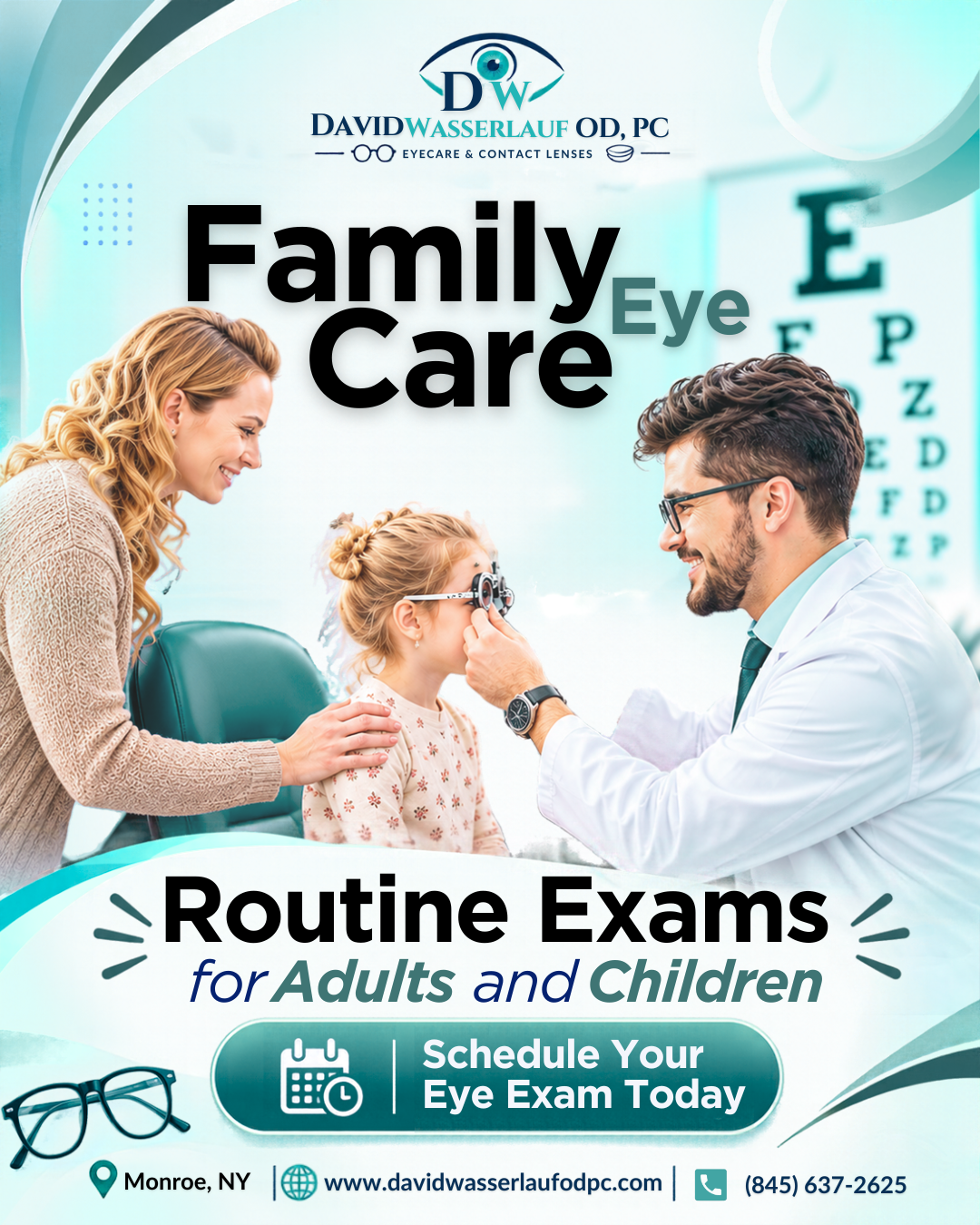
Family eye care focuses on maintaining healthy vision throughout different stages of life, from childhood through adulthood and older age.
Vision needs change over time. Children require assessments to support visual development, adults may experience digital eye strain or prescription changes, and older individuals may face an increased risk of certain eye diseases.
Regular eye examinations can help identify vision problems and detect signs of eye conditions that may otherwise go unnoticed.
Benefits of Routine Family Eye Exams
- Detect changes in vision and prescription needs
- Identify signs of certain eye diseases
- Monitor eye health over time
- Evaluate visual development in children
- Address blurry vision, headaches, and eye discomfort
- Assess contact lens suitability and fit
- Support long-term eye health
Healthy eyes are important at every age, even when your vision seems perfectly clear.
What Is a Comprehensive Eye Exam?
A comprehensive eye exam is more than a simple vision screening.
While a basic screening may identify possible vision difficulties, a comprehensive examination evaluates visual function and different aspects of eye health.
Depending on your age, symptoms, and medical history, an eye exam may include:
1. Visual Acuity Testing
Visual acuity testing measures how clearly you can see at different distances.
Your optometrist may use an eye chart to evaluate distance and near vision.
2. Refraction Testing
Refraction determines whether you need corrective lenses and helps establish an appropriate eyeglass prescription.
Common refractive errors include:
- Myopia (nearsightedness): Difficulty seeing distant objects clearly.
- Hyperopia (farsightedness): Difficulty focusing on certain objects, particularly at near distances.
- Astigmatism: Blurred or distorted vision caused by differences in the focusing surfaces of the eye.
- Presbyopia: Age-related difficulty focusing on nearby objects.
3. Eye Health Evaluation
Your eye doctor examines structures of the eyes to identify signs of abnormalities or disease.
This may include evaluating the cornea, lens, retina, optic nerve, and other eye structures.
4. Eye Pressure Assessment
Measuring intraocular pressure can help assess glaucoma risk.
However, glaucoma cannot be diagnosed or ruled out using eye pressure alone.
5. Eye Coordination and Focusing Assessment
Your optometrist may evaluate how well your eyes work together, particularly when symptoms suggest focusing or binocular vision difficulties.
6. Retinal and Optic Nerve Examination
An examination of the retina and optic nerve can help identify changes associated with conditions such as glaucoma, diabetic eye disease, and macular degeneration.
The specific tests performed depend on the patient’s individual needs.
Pediatric Eye Exams in Monroe, NY: Protecting Your Child’s Vision
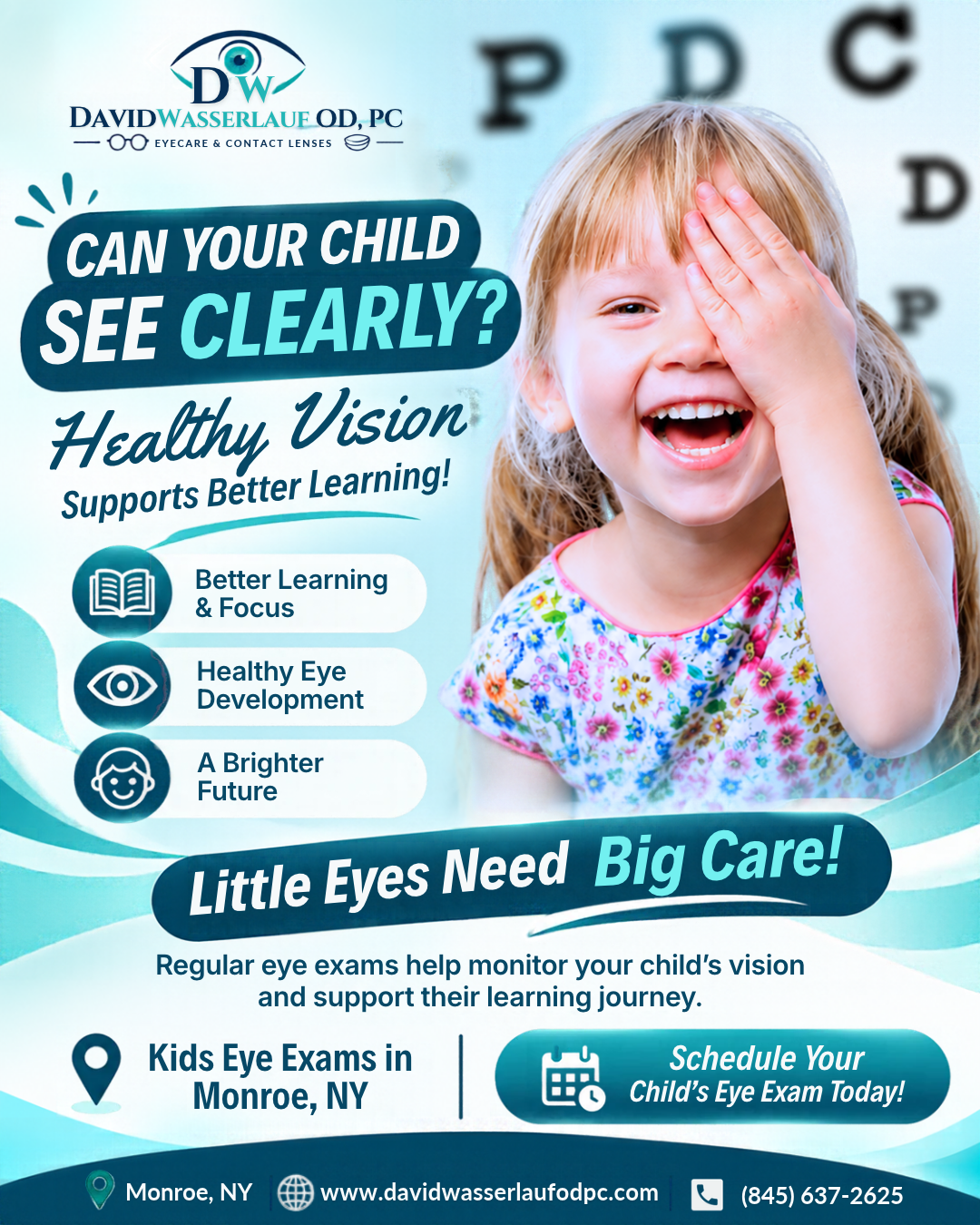
Children depend on healthy vision for learning, reading, playing, and exploring the world around them.
Unfortunately, children may not recognize or communicate that they are experiencing vision problems.
A child who has always seen the world through blurry vision may assume that everyone sees the same way.
This is why pediatric eye examinations are important.
Common Signs Your Child May Need an Eye Exam
Parents should watch for:
- Frequent squinting
- Sitting unusually close to screens
- Holding books very close to the face
- Frequent eye rubbing
- Complaints of headaches
- Difficulty seeing classroom boards
- Covering or closing one eye
- Eye misalignment
- Difficulty maintaining visual attention during reading
These symptoms can have multiple causes and should be evaluated appropriately.
When Should Children Have Their Eyes Examined?
The American Optometric Association recommends comprehensive eye examinations during infancy, again during early childhood, before first grade, and regularly throughout the school years.
The exact timing should be individualized based on age, risk factors, symptoms, and professional guidance.
Children with a family history of eye conditions, suspected vision problems, or developmental concerns may require earlier or more frequent evaluations.
Why Early Eye Exams Matter
Pediatric eye exams can help identify:
- Nearsightedness
- Farsightedness
- Astigmatism
- Amblyopia (lazy eye)
- Strabismus (eye misalignment)
- Certain focusing and eye coordination difficulties
Early identification is especially important for conditions that can affect visual development.
Adult Eye Exams in Monroe, NY: Why Routine Checkups Matter
Many adults schedule eye appointments only when their vision becomes blurry or their glasses stop working effectively.
However, some eye diseases can develop without obvious early symptoms.
Routine adult eye exams can help assess vision changes and monitor eye health.
Common Vision Problems in Adults
Blurry Vision
Blurry vision may result from refractive errors, dry eyes, cataracts, or other eye conditions.
Digital Eye Strain
Extended computer and smartphone use may contribute to eye fatigue, dryness, and temporary blurred vision.
Dry Eye Symptoms
Dry eye disease can cause burning, irritation, fluctuating vision, or a gritty sensation.
Presbyopia
Beginning commonly in the early-to-mid 40s, many adults notice increasing difficulty reading small print or focusing on nearby objects.
Eye Health Changes
Adults may develop conditions requiring medical monitoring, especially when they have diabetes, high blood pressure, or a family history of eye disease.
How Often Should Adults Get an Eye Exam?
Eye exam frequency depends on age, health history, symptoms, and individual risk factors.
For adults without symptoms or known risk factors, the American Optometric Association recommends comprehensive eye examinations at least every two years from ages 18–64 and annually beginning at age 65.
More frequent examinations may be recommended for individuals with:
- Diabetes
- A family history of glaucoma
- Existing eye conditions
- Certain medications affecting eye health
- Significant vision changes
- Other clinical risk factors
Your eye doctor can recommend an examination schedule appropriate for you.
Common Eye Conditions Detected During Comprehensive Eye Exams
1. Myopia (Nearsightedness)
Myopia causes distant objects to appear blurry while nearby objects may remain clearer.
It often develops during childhood and may progress through adolescence.
2. Hyperopia (Farsightedness)
Hyperopia can make near tasks uncomfortable or blurry, although symptoms vary based on age and degree of refractive error.
3. Astigmatism
Astigmatism can cause blurry or distorted vision at different distances.
Glasses or contact lenses may help correct the problem.
4. Dry Eye Disease
Dry eye occurs when the eyes do not produce adequate tears or when tears do not function properly.
Symptoms may include irritation, burning, and fluctuating vision.
5. Cataracts
Cataracts involve clouding of the eye’s natural lens.
Symptoms may include blurry vision, glare, and difficulty seeing at night.
6. Glaucoma
Glaucoma is a group of eye diseases that can damage the optic nerve.
Certain forms develop without noticeable symptoms until vision loss has occurred.
7. Diabetic Eye Disease
Diabetes can affect the blood vessels in the retina and lead to diabetic retinopathy.
Regular dilated eye examinations are particularly important for people with diabetes.
8. Age-Related Macular Degeneration
Age-related macular degeneration affects the macula, the part of the retina responsible for detailed central vision.
Early detection and appropriate monitoring can help guide management.
Family Eye Care vs. Vision Screening: What’s the Difference?
Many people assume that passing a vision screening means their eyes are healthy.
However, vision screenings and comprehensive eye examinations serve different purposes.
| Vision screening | Comprehensive eye exam |
|---|---|
| Checks selected aspects of vision | Evaluates vision and eye health |
| May identify possible vision difficulties | Helps diagnose refractive errors and certain eye conditions |
| Often performed in schools or primary care settings | Performed by an eye care professional |
| Usually involves limited testing | Includes tests selected according to patient needs |
| Does not replace a comprehensive examination | Supports ongoing vision and eye health management |
A normal screening result does not necessarily rule out eye disease or other visual problems.
Glasses and Contact Lens Exams in Monroe, NY
Choosing the right vision correction can improve everyday comfort and visual clarity.
Eyeglass Prescription Exams
An eyeglass examination helps determine whether prescription lenses can correct blurry vision.
Your prescription may change over time, particularly during childhood and after age 40.
Contact Lens Evaluations
Contact lenses require additional evaluation beyond a standard eyeglass prescription.
Your optometrist may assess:
- Corneal shape
- Tear film quality
- Lens fit
- Prescription requirements
- Comfort and suitability
- Contact lens hygiene and safety
Contact lenses are medical devices and should be used according to professional instructions.
At David Wasserlauf, OD, PC, patients can inquire about eye examinations and contact lens services suited to their needs.
Digital Eye Strain: How Screen Time Affects Your Eyes
Computers, smartphones, and tablets have become part of everyday life.
Prolonged screen use can contribute to digital eye strain, sometimes called computer vision syndrome.
Common Symptoms
- Tired eyes
- Dryness
- Temporary blurry vision
- Headaches
- Difficulty refocusing
- Neck and shoulder discomfort
Tips to Reduce Digital Eye Strain
Follow the 20-20-20 Rule: Every 20 minutes, look at something approximately 20 feet away for at least 20 seconds.
Blink Regularly: People often blink less frequently while focusing on screens.
Adjust Screen Position: Keep your monitor at a comfortable distance and slightly below eye level.
Reduce Glare: Adjust lighting and screen brightness to improve comfort.
Schedule an Eye Exam: Persistent symptoms may indicate dry eye disease, an uncorrected prescription, or another issue requiring evaluation.
Family Eye Care for Seniors: Protecting Vision as You Age
Older adults face an increased risk of certain eye conditions, including cataracts, glaucoma, and age-related macular degeneration.
Vision changes can affect driving, reading, mobility, and independence.
Regular eye examinations help monitor eye health and identify changes that may require treatment.
Older adults should also inform their eye doctor about chronic medical conditions, medications, and any new visual symptoms.
Why Choose David Wasserlauf, OD, PC, for Family Eye Care in Monroe, NY?
Finding an optometrist who understands your family’s changing vision needs can make routine eye care more convenient.
At David Wasserlauf, OD, PC, our focus is on providing personalized vision and eye health services for patients in Monroe, New York.
Our Eye Care Services Include
- Comprehensive eye exams
- Adult and children’s vision evaluations
- Glasses prescription assessments
- Contact lens examinations
- Medical eye care
- Dry eye evaluations
- Eye health monitoring
- Individualized vision care recommendations
We believe every patient deserves attentive care and clear information about their eye health.
Whether you’re scheduling a routine eye exam or addressing a specific vision concern, our goal is to help you make informed decisions about your eyesight.
Looking for an Eye Doctor Near You in Monroe, NY?
If you’ve searched for:
- Eye doctor near me
- Optometrist near me
- Eye exam near me
- Eye doctor Monroe NY
- Optometrist Monroe NY
- Family eye care Monroe NY
- Pediatric eye exam Monroe NY
- Comprehensive eye exam Monroe NY
- Contact lens exam Monroe NY
David Wasserlauf, OD, PC offers a local option for personalized vision care.
Conveniently located in Monroe, New York, the practice serves patients seeking routine eye examinations, vision correction, and eye health evaluations.
Schedule Your Family Eye Exam in Monroe, NY
Your family’s vision deserves regular attention.
Whether your child needs a vision evaluation, you’re updating your glasses prescription, or you’re experiencing eye discomfort, a comprehensive eye exam can help identify the next steps.
David Wasserlauf, OD, PC — Eyecare & Contact Lenses
Address: 501 Route 208, Monroe, NY 10950
Phone: (845) 637-2625
Website: https://www.davidwasserlaufodpc.com
Clear Vision. Healthy Eyes. Better Living.
Contact our office today to schedule your comprehensive eye examination.
Frequently Asked Questions About Family Eye Care
1. Where can I find a family eye doctor in Monroe, NY?
David Wasserlauf, OD, PC, located at 501 Route 208 in Monroe, NY, provides eye care services for adults and children. Contact the practice for appointment availability and age-specific services.
2. How often should I get an eye exam?
The recommended frequency depends on your age, symptoms, and eye health risks. Adults may need examinations every one to two years, while children, older adults, and patients with certain medical conditions may need more frequent care.
3. At what age should children have their first eye exam?
The American Optometric Association recommends a comprehensive eye exam during infancy, with additional examinations during early childhood and before first grade.
4. What happens during a comprehensive eye exam?
An eye doctor may evaluate visual acuity, prescription needs, eye coordination, eye pressure, and the health of the retina and optic nerve. Testing varies by patient.
5. Can an eye exam detect diseases before symptoms appear?
Yes. Some eye conditions, including certain forms of glaucoma and diabetic eye disease, may be detected during an examination before noticeable vision changes develop.
6. What is the difference between an optometrist and an ophthalmologist?
An optometrist provides primary eye and vision care, including examinations, prescriptions, and diagnosis and management of many eye conditions. An ophthalmologist is a medical doctor specializing in eye disease and surgery.
7. Do children need eye exams if they pass school vision screenings?
Yes. School screenings are helpful but do not replace comprehensive eye examinations.
8. Can too much screen time damage your eyes?
Extended screen use commonly causes temporary symptoms such as dryness and eye fatigue. Evidence does not establish that ordinary screen exposure permanently damages the eyes, although prolonged near work and limited outdoor time are associated with myopia risk in children.
9. How do I know if I need glasses?
Signs may include blurry vision, squinting, difficulty reading, or trouble seeing distant objects. An eye examination can determine whether corrective lenses are needed.
10. Does a contact lens exam differ from a regular eye exam?
Yes. A contact lens evaluation includes additional measurements and fitting assessments to help ensure appropriate lens selection and eye health.
11. What should I bring to my eye exam?
Bring your current glasses or contact lenses, a medication list, relevant medical history, and insurance information if applicable.
12. When should I seek urgent eye care?
Sudden vision loss, new flashes of light with many floaters, a curtain-like shadow over vision, severe eye pain, or significant eye injury requires urgent medical evaluation.
Author: Michael Clarke