Your child may be doing well in school, enjoying sports, and participating in everyday activities—but are you sure they can see clearly?
Healthy vision plays an essential role in childhood development. From recognizing letters and reading books to following classroom lessons and participating in sports, children rely on their eyesight throughout the day.
Unfortunately, many childhood vision problems can go unnoticed because children may not realize their vision is different from what it should be.
If you’ve been searching for a kids eye exam near me, children’s eye doctor near me, or pediatric eye exam in Monroe, NY, understanding the importance of regular comprehensive eye examinations is a great place to start.
At David Wasserlauf OD, PC, we recognize the importance of protecting children’s vision and helping families make informed decisions about their eye health.
In this guide, we’ll explore why children’s eye exams matter, common signs of vision problems, recommended examination schedules, and how comprehensive eye care can support your child’s learning and development.
Why Are Children’s Eye Exams So Important?
Children use their vision to learn about the world around them. Clear and comfortable eyesight helps them read, write, recognize objects, understand visual information, and coordinate physical movements.
However, not every vision problem causes obvious symptoms.
Some children may experience blurry vision, difficulty focusing, or problems with eye coordination without knowing how to explain what they’re experiencing.
A comprehensive children’s eye exam can help identify vision problems and evaluate eye health, even when a child has not complained about their eyesight.
5 Important Benefits of Regular Children’s Eye Exams
1. Early Detection of Vision Problems
Eye examinations can identify common refractive errors, including nearsightedness, farsightedness, and astigmatism.
2. Support for Learning and Reading
Clear vision helps children see classroom materials, books, screens, and other visual information comfortably.
3. Healthy Visual Development
Eye examinations help assess how a child’s vision and eyes are developing.
4. Identification of Eye Conditions
Certain childhood eye conditions, such as amblyopia and strabismus, benefit from early identification and appropriate management.
5. Greater Confidence in Everyday Activities
Comfortable vision can support participation in reading, sports, hobbies, and other activities.
How Can Vision Problems Affect Your Child’s Learning?
Children spend a significant portion of their school day using visual skills.
They need to see classroom boards, read printed materials, follow instructions, use computers, and switch their focus between objects at different distances.
When a child has an uncorrected vision problem, these tasks may become more difficult.
Common Learning-Related Signs of Vision Problems
Parents and teachers may notice:
- Difficulty reading text or seeing classroom boards
- Squinting while looking at distant objects
- Holding books or digital devices unusually close
- Complaints of headaches during reading
- Losing their place while reading
- Frequent eye rubbing
- Avoiding visually demanding activities
- Closing or covering one eye
- Difficulty maintaining visual attention
These behaviors can have many possible causes and do not automatically indicate an eye condition.
However, if your child regularly experiences these difficulties, scheduling a comprehensive pediatric eye exam may help determine whether a vision problem is contributing.
Important: Vision problems can affect access to learning, but an eye examination does not diagnose or treat learning disabilities such as dyslexia or ADHD.
7 Common Vision Problems in Children
Understanding common childhood eye conditions can help parents recognize when professional eye care may be necessary.
1. Nearsightedness (Myopia)
Nearsightedness occurs when distant objects appear blurry while nearby objects may remain clear.
Children with myopia may:
- Squint to see classroom boards
- Sit closer to the television
- Have difficulty seeing distant signs
- Complain about blurry distance vision
Myopia often develops during school-age years and may progress as children grow.
Prescription glasses or contact lenses may help correct vision. Depending on the child’s age and individual needs, an optometrist may also discuss evidence-based myopia management options.
2. Farsightedness (Hyperopia)
Farsightedness can make focusing on nearby objects more difficult, although the effects vary with the degree of hyperopia and the child’s focusing ability.
Some children may experience headaches, eye strain, or difficulty with prolonged reading.
An eye examination can determine whether vision correction is appropriate.
3. Astigmatism
Astigmatism is a refractive error caused by differences in the curvature of the cornea or lens.
It may cause blurry or distorted vision at different distances.
Depending on its severity, astigmatism can affect reading, classroom activities, and visual comfort.
4. Lazy Eye (Amblyopia)
Amblyopia occurs when vision in one or sometimes both eyes does not develop normally during childhood.
It may be associated with significant refractive errors, eye misalignment, or other conditions that interfere with normal visual development.
Children may not notice the problem because their stronger eye compensates.
Early diagnosis is especially important because treatment can be more effective during childhood.
5. Crossed Eyes (Strabismus)
Strabismus occurs when the eyes are not properly aligned.
One eye may turn inward, outward, upward, or downward.
Some forms of strabismus can interfere with binocular vision and contribute to amblyopia.
A child with a persistent eye turn should receive an appropriate professional evaluation.
6. Eye Focusing and Coordination Problems
Some children experience difficulty coordinating their eyes or maintaining comfortable focus during near work.
Symptoms may include:
- Eye strain
- Headaches
- Blurred or double vision
- Difficulty maintaining comfortable reading
An eye care professional can assess whether an underlying visual problem is present.
7. Eye Allergies and Dry Eye Symptoms
Children may also experience itching, redness, irritation, or watery eyes.
Allergies, environmental irritants, and prolonged screen use can contribute to some of these symptoms.
Persistent discomfort should be evaluated to determine the cause.
10 Warning Signs Your Child May Need an Eye Exam
Children don’t always tell their parents when something is wrong with their vision.
Watch for these possible warning signs:
1. Frequent Squinting
Squinting may temporarily improve clarity when a child has an uncorrected refractive error.
2. Sitting Too Close to Screens
Regularly moving unusually close to a television or screen may indicate difficulty seeing clearly.
3. Holding Books Very Close
Some children with nearsightedness prefer reading materials at close distances.
4. Frequent Headaches
Headaches during reading or other visual activities may sometimes be associated with eye strain or focusing problems.
5. Rubbing Their Eyes Frequently
Eye rubbing may occur because of irritation, allergies, fatigue, or other concerns.
6. Covering One Eye
A child may cover one eye to reduce double vision or visual discomfort.
7. Tilting Their Head
An unusual head position may sometimes compensate for an eye alignment or vision issue.
8. Complaining of Blurry Vision
Any persistent complaint of unclear vision deserves attention.
9. Difficulty Seeing Classroom Materials
Children who struggle to see distant writing or presentations may need vision testing.
10. Avoiding Reading or Other Visual Tasks
Avoidance may have several causes, but vision problems should be considered when symptoms persist.
If you notice one or more of these signs, consider scheduling a children’s eye examination in Monroe, NY.
At What Age Should Children Have Their First Eye Exam?
Children’s vision develops rapidly during infancy and early childhood.
Routine pediatric vision screening begins early, and a comprehensive examination may be recommended based on the child’s age, symptoms, risk factors, and the guidance of their healthcare professionals.
Infants and Toddlers
Healthcare professionals assess aspects of eye health and visual development during routine pediatric visits.
Children with abnormal screening findings, visible eye misalignment, or other concerning symptoms may need referral to an eye care specialist.
Preschool Children: Ages 3–5
Vision screening is especially important during the preschool years.
The U.S. Preventive Services Task Force recommends vision screening at least once for children ages 3–5 to detect amblyopia or its risk factors.
Children who do not pass screening should receive appropriate follow-up.
School-Age Children
As children enter school, visual demands increase.
Regular age-appropriate screening and eye examinations when indicated can help identify changes in vision.
Children who wear glasses, have diagnosed eye conditions, or have additional risk factors may require more frequent visits.
Teenagers
Teenagers may experience changes in their prescriptions, particularly if they have myopia.
Regular monitoring is important when vision changes or existing eye conditions are present.
How often should your child have a comprehensive eye exam?
The ideal schedule depends on age, symptoms, family history, existing eye conditions, and professional recommendations. Ask your child’s optometrist for an individualized examination schedule.
What Happens During a Comprehensive Children’s Eye Exam?
Parents searching for a pediatric optometrist near me often want to know what happens during an appointment.
A comprehensive eye examination typically includes age-appropriate tests designed to evaluate vision and eye health.
1. Medical and Vision History
The eye doctor may ask about:
- Your child’s medical history
- Family history of eye conditions
- Previous vision screenings
- Reading or classroom concerns
- Headaches or eye discomfort
- Previous glasses or contact lens use
2. Visual Acuity Testing
Visual acuity testing evaluates how clearly your child can see.
Depending on age, the optometrist may use letters, symbols, pictures, or other age-appropriate methods.
3. Refractive Error Assessment
The doctor evaluates whether your child has nearsightedness, farsightedness, or astigmatism.
Dilating eye drops may be used when clinically appropriate to help obtain accurate measurements.
4. Eye Alignment and Movement Evaluation
These tests help assess how the eyes work together and whether eye misalignment is present.
5. Eye Health Examination
The optometrist examines relevant structures of the eyes to identify signs of disease or other abnormalities.
6. Personalized Recommendations
After the examination, the doctor may recommend:
- No vision correction if it is not needed
- Prescription eyeglasses
- Additional monitoring
- Treatment for an identified eye condition
- Referral to another eye care specialist when appropriate
The goal is to understand your child’s individual vision needs and provide appropriate guidance.
Children’s Vision Screening vs. Comprehensive Eye Exam: What’s the Difference?
Many parents assume that passing a school vision screening means their child’s eyes are completely healthy.
However, vision screenings and comprehensive eye examinations serve different purposes.
School Vision Screening
A school vision screening is a useful way to identify certain potential vision problems.
It commonly evaluates aspects of distance visual acuity and may include other screening methods.
However, screening does not assess every aspect of vision or eye health.
Comprehensive Eye Examination
A comprehensive examination provides a more detailed assessment of the eyes and visual system.
It may evaluate:
- Distance and near vision
- Refractive errors
- Eye alignment
- Eye movement and coordination
- Focusing ability when indicated
- Eye health
- Potential signs of underlying conditions
A child can pass a basic vision screening and still have an eye problem that requires further evaluation.
If your child has persistent visual symptoms or other concerns, a comprehensive eye exam may be appropriate even after a normal screening result.
How Does Screen Time Affect Children’s Eyes?
Digital devices are now a regular part of children’s education and entertainment.
Although screen use does not automatically mean a child will develop an eye disease, prolonged viewing can contribute to temporary discomfort.
Common Screen-Related Symptoms
Children may experience:
- Eye fatigue
- Dryness or irritation
- Temporary blurry vision
- Headaches
- Difficulty maintaining comfortable focus
Extended near work and limited outdoor time have also been studied in relation to childhood myopia.
5 Ways to Encourage Healthy Screen Habits
1. Encourage Regular Breaks
The 20-20-20 rule is a practical reminder: approximately every 20 minutes, look at something around 20 feet away for 20 seconds.
2. Encourage Outdoor Activities
Regular outdoor time is associated with a lower risk of developing myopia in children.
3. Maintain a Comfortable Viewing Distance
Avoid holding screens excessively close to the eyes.
4. Reduce Glare
Adjust lighting and screen brightness to support comfortable viewing.
5. Watch for Persistent Symptoms
If your child experiences recurring headaches, blurry vision, or eye discomfort, arrange an appropriate evaluation.
How Parents Can Support Healthy Vision at Home
Parents play an important role in helping children develop healthy visual habits.
Encourage Outdoor Play
Outdoor activities provide opportunities for physical exercise and distance viewing.
Provide Balanced Nutrition
A balanced diet containing fruits, vegetables, and other nutrient-rich foods supports general health, including eye health.
Promote Healthy Reading Habits
Encourage comfortable lighting, appropriate reading distances, and regular breaks during extended near work.
Use Protective Eyewear
Appropriate protective eyewear can reduce the risk of eye injuries during certain sports and activities.
Follow Vision Correction Recommendations
If your child has been prescribed glasses or other treatment, follow the eye doctor’s instructions.
Attend Recommended Eye Appointments
Follow-up examinations help monitor prescription changes and previously diagnosed eye conditions.
Children’s Eye Exams in Monroe, NY: Why Local Eye Care Matters
When parents search Google for kids eye exam near me, children’s eye doctor Monroe NY, or family eye care Monroe NY, they are often looking for convenient, professional care close to home.
Choosing a local eye care practice can make it easier to schedule examinations, attend follow-up visits, and address changes in your child’s vision.
At David Wasserlauf OD, PC, families in Monroe, New York, can inquire about comprehensive eye care and available services for children.
Why Consider David Wasserlauf OD, PC?
The practice offers eye care and contact lens services, with a focus on helping patients understand their vision needs.
Parents should contact the office to confirm age eligibility, pediatric appointment availability, insurance acceptance, and the specific services offered for their child.
David Wasserlauf OD, PC — Eyecare & Contact Lenses
📍 501 Route 208, Monroe, NY 10950
📞 (845) 637-2625
Schedule Your Child’s Eye Exam Today
If you’re concerned about your child’s vision or want to discuss an appropriate eye examination schedule, contact David Wasserlauf OD, PC.
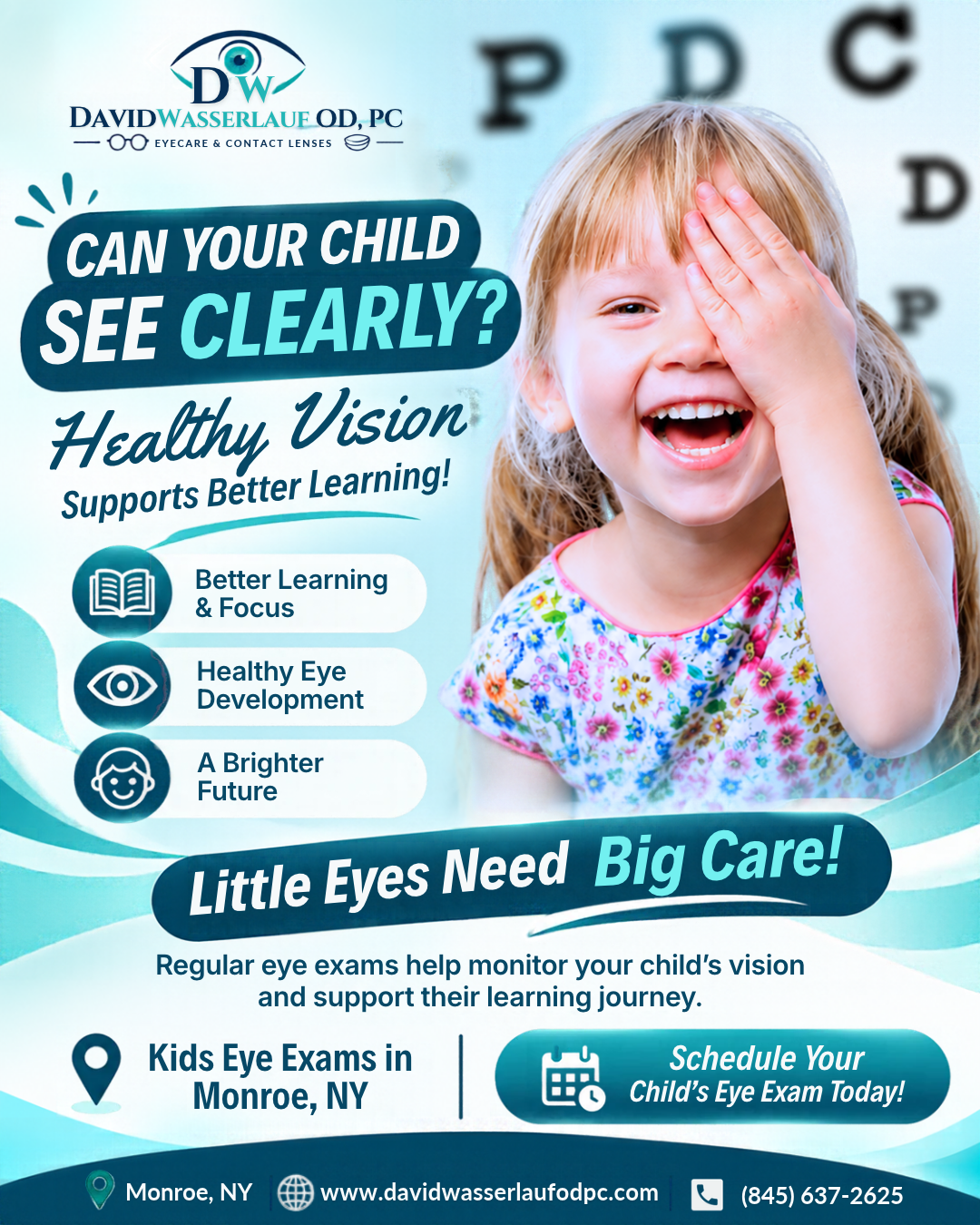
Little Eyes Need Big Care — Healthy Vision Supports a Brighter Future!
Frequently Asked Questions About Children’s Eye Exams
1. How do I find a children’s eye doctor near me?
Search for a licensed optometrist or pediatric ophthalmologist in your area. Confirm that the practice examines children in your child’s age group and offers the services needed.
2. What age should a child have their first eye exam?
Eye health and vision are assessed during early pediatric care. The need for a comprehensive eye examination depends on age, screening results, symptoms, and individual risk factors. Your child’s healthcare professional can recommend an appropriate schedule.
3. How often should kids get eye exams?
The recommended frequency varies depending on age, risk factors, symptoms, and whether your child has an existing vision condition. Children with glasses or diagnosed eye conditions may need more frequent examinations.
4. Can poor eyesight affect school performance?
Yes. Uncorrected vision problems may make reading, seeing classroom materials, and completing visually demanding tasks more difficult. However, learning difficulties can have many causes.
5. What are the signs of vision problems in children?
Common signs include squinting, blurry vision, frequent headaches, unusual reading distances, covering one eye, or difficulty seeing classroom boards.
6. Can a child have vision problems without complaining?
Yes. Children may not realize their eyesight is abnormal, particularly if a problem developed gradually or affects only one eye.
7. What is the difference between a pediatric eye exam and a school vision screening?
School screenings help identify certain potential vision problems. Comprehensive eye examinations provide a more detailed evaluation of visual function and eye health.
8. Does my child need glasses?
Only an appropriate eye examination can determine whether prescription glasses are necessary. The decision depends on the child’s refractive error, symptoms, age, and visual development.
9. Can too much screen time cause blurry vision in children?
Prolonged screen use may contribute to temporary blurry vision, eye fatigue, and dryness. Persistent symptoms should be evaluated.
10. What is lazy eye in children?
Lazy eye, or amblyopia, is reduced vision caused by abnormal visual development. Early diagnosis and treatment are important.
11. Can children’s vision change as they grow?
Yes. Refractive errors can develop or change throughout childhood and adolescence, particularly myopia.
12. Are children’s eye exams covered by insurance?
Coverage depends on the insurance plan, provider network, age, and type of examination. Contact your insurer and the eye care practice to confirm benefits.
13. How long does a children’s eye exam take?
Appointment length varies according to the child’s age, examination findings, and whether additional testing or dilation is needed.
14. Where can I schedule a children’s eye exam in Monroe, NY?
Contact David Wasserlauf OD, PC, at (845) 637-2625 to ask about pediatric eye examination availability and scheduling.
Final Thoughts: Healthy Vision Helps Children Learn, Grow, and Thrive
Your child’s eyesight is an important part of their overall development.
From reading and learning to playing sports and exploring the world, clear and comfortable vision helps children participate in everyday activities.
Regular vision screening, appropriate comprehensive eye examinations, and timely treatment of identified problems can help protect your child’s eye health.
If you’re searching for a children’s eye exam near me, a kids’ eye doctor in Monroe, NY, or family eye care in Monroe, New York, consider contacting David Wasserlauf OD, PC to discuss your child’s vision needs.
Author: Michael Clarke