Have you noticed that your vision looks cloudy, fuzzy, or out of focus? Blurry vision is one of the most common reasons people schedule an eye examination. It can affect one or both eyes, develop gradually, or appear suddenly.
Sometimes, blurred vision is caused by something relatively simple, such as dry eyes, digital eye strain, or an outdated eyeglass prescription. In other cases, it may signal an underlying eye condition or health problem that requires prompt medical attention.
Understanding the common causes of blurry vision, warning signs, and when to get your eyes checked can help you protect your eyesight and maintain long-term eye health.
If you are experiencing changes in your vision, a comprehensive eye examination can help determine the cause and identify appropriate treatment options.
What Is Blurry Vision?
Blurry vision occurs when objects appear unclear, hazy, or out of focus. You may have difficulty reading small print, recognizing faces from a distance, seeing road signs, or focusing on a computer screen.
Blurred vision may affect:
- Distance vision: Difficulty seeing objects far away.
- Near vision: Trouble reading books, messages, or other close-up materials.
- One eye: Blurriness affecting only the left or right eye.
- Both eyes: Reduced visual clarity in both eyes.
- Intermittent vision: Blurriness that comes and goes.
- Sudden vision changes: Unexpected loss of visual clarity that may require urgent evaluation.
The underlying cause determines whether blurry vision can be corrected with glasses, contact lenses, medication, or other treatments.
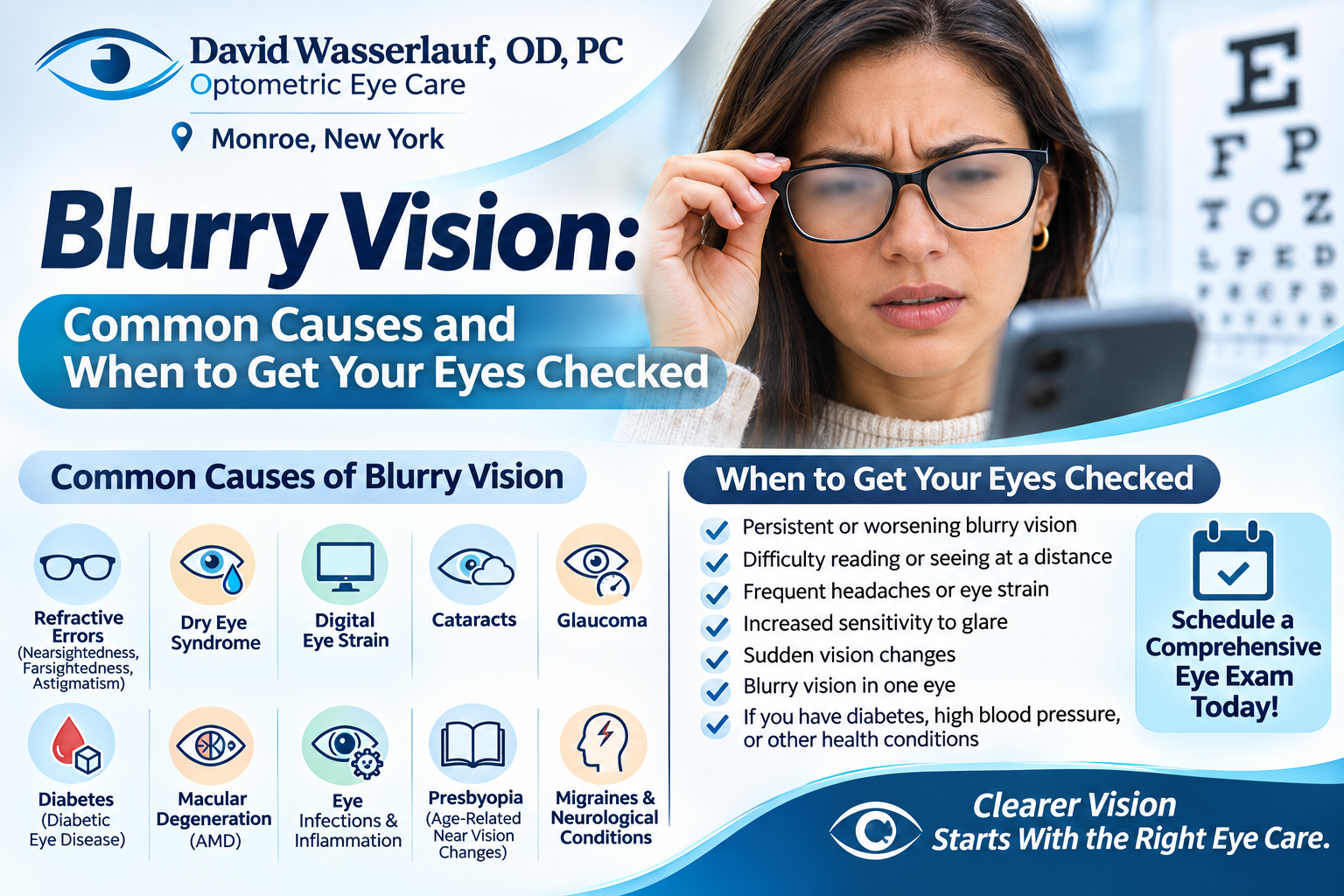
10 Common Causes of Blurry Vision
1. Refractive Errors: Nearsightedness, Farsightedness, and Astigmatism
Refractive errors are among the most common causes of blurry vision.
They occur when the eye does not focus light properly onto the retina.
Nearsightedness (Myopia)
People with myopia can usually see nearby objects clearly but struggle to see distant objects, such as road signs or classroom boards.
Farsightedness (Hyperopia)
Hyperopia can make close-up tasks more difficult, although symptoms depend on age and the degree of farsightedness.
Astigmatism
Astigmatism occurs when the cornea or lens has an irregular curvature, causing blurry or distorted vision at various distances.
Treatment: Prescription eyeglasses, contact lenses, or other appropriate vision-correction options can improve clarity.
2. Dry Eye Syndrome
Dry eyes can cause fluctuating blurry vision, especially after prolonged reading, computer use, or exposure to dry environments.
Common symptoms include:
- Burning or stinging sensations
- Redness or irritation
- A gritty feeling in the eyes
- Excessive tearing
- Blurry vision that improves temporarily after blinking
Dry eye occurs when the tear film does not adequately lubricate and protect the eye’s surface.
Treatment: Depending on the cause and severity, an eye doctor may recommend artificial tears, environmental changes, eyelid care, or prescription treatments.
3. Digital Eye Strain
Spending long hours looking at computers, smartphones, and tablets can contribute to digital eye strain.
Symptoms may include blurry vision, tired eyes, headaches, dryness, and difficulty focusing.
People often blink less frequently while using digital devices, which can worsen dry eye symptoms.
Prevention tip: Follow the 20-20-20 rule. Every 20 minutes, look at something approximately 20 feet away for at least 20 seconds.
Adjusting screen brightness, improving lighting, and taking regular breaks may also help.
4. Cataracts
A cataract develops when the eye’s natural lens becomes cloudy.
Cataracts are more common with aging and often develop gradually.
Symptoms may include:
- Cloudy or blurry vision
- Increased sensitivity to glare
- Difficulty driving at night
- Faded or yellowish colors
- Frequent changes in eyeglass prescriptions
Treatment: Updated glasses may help during earlier stages. Cataract surgery may be recommended when vision changes interfere with daily activities.
5. Glaucoma
Glaucoma refers to a group of eye diseases that damage the optic nerve and can lead to permanent vision loss.
The most common form, open-angle glaucoma, typically develops gradually and may not produce noticeable symptoms in its early stages.
Although glaucoma does not always cause early blurry vision, advanced disease can affect visual function.
Important: Sudden severe eye pain, redness, headache, nausea, and blurred vision may indicate acute angle-closure glaucoma, a medical emergency.
Regular comprehensive eye examinations are important for detecting glaucoma before significant vision loss occurs.
6. Diabetes and Diabetic Eye Disease
High blood sugar can temporarily affect vision by changing fluid balance in the eye.
Over time, diabetes may also damage retinal blood vessels, causing diabetic retinopathy or diabetic macular edema.
Possible symptoms include:
- Blurry or fluctuating vision
- Floaters
- Difficulty seeing clearly
- Areas of missing vision
Diabetic eye disease can develop without noticeable symptoms.
Prevention: People with diabetes should follow their healthcare professional’s recommendations for dilated eye examinations and blood sugar management.
7. Age-Related Macular Degeneration (AMD)
Age-related macular degeneration affects the macula, the part of the retina responsible for sharp central vision.
It primarily affects older adults.
Symptoms may include:
- Blurry central vision
- Straight lines appearing wavy
- Difficulty reading
- Trouble recognizing faces
- Dark or distorted areas in central vision
AMD requires professional evaluation, and treatment depends on the specific type and stage.
8. Eye Infections and Inflammation
Eye infections and inflammatory conditions may cause blurred vision along with redness, discharge, discomfort, or light sensitivity.
Examples include conjunctivitis, keratitis, and uveitis.
Some conditions, particularly infections involving the cornea, can threaten vision if treatment is delayed.
Seek prompt medical care if blurry vision occurs with significant eye pain, light sensitivity, or redness, especially if you wear contact lenses.
9. Presbyopia: Age-Related Near Vision Changes
Presbyopia is a natural age-related change in the eye’s ability to focus on nearby objects.
It commonly becomes noticeable after age 40.
Symptoms include:
- Difficulty reading small print
- Holding reading materials farther away
- Eye fatigue during close-up work
- Needing brighter light for reading
Reading glasses, bifocals, progressive lenses, or multi focal contact lenses may help.
10. Migraine and Neurological Conditions
Some migraines cause temporary visual disturbances, including shimmering lights, blind spots, or blurred areas.
However, sudden blurry vision can also be associated with serious neurological conditions, including stroke.
Never assume that a new or unusual visual disturbance is simply a migraine.
Sudden vision loss or blurred vision accompanied by weakness, facial drooping, difficulty speaking, severe headache, or loss of coordination requires emergency medical attention.
Blurry Vision in One Eye vs. Both Eyes
The pattern of blurry vision can help an eye care professional investigate possible causes.
| Vision change | Possible causes |
|---|---|
| Blurry vision in one eye | Refractive error, dry eye, cataract, retinal disease, or other eye conditions |
| Blurry vision in both eyes | Refractive errors, dry eyes, blood sugar changes, or other ocular and systemic conditions |
| Blurry vision when reading | Presbyopia, farsightedness, or focusing difficulties |
| Blurry distance vision | Nearsightedness or other refractive errors |
| Blurry vision after screen use | Digital eye strain or dry eyes |
| Sudden blurry vision | Retinal, vascular, neurological, or other urgent conditions |
These are possible explanations, not diagnoses. The same symptom can have several causes, and an eye examination is needed to determine what is happening.
When Should You Get Your Eyes Checked for Blurry Vision?
Not every episode of blurry vision is an emergency, but changes in vision should not be ignored.
Schedule an Eye Examination If You Notice:
- Persistent blurry vision
- Difficulty reading or seeing distant objects
- Frequent headaches associated with visual tasks
- Increasing sensitivity to glare
- Trouble driving at night
- Frequent changes in eyeglass prescriptions
- Blurry vision that repeatedly returns
- Eye discomfort or dryness that does not improve
Even mild vision changes can interfere with work, driving, reading, and daily activities.
When Is Blurry Vision an Emergency?
Seek immediate emergency medical attention if you experience:
- Sudden loss of vision in one or both eyes
- Sudden severe blurring of vision
- A dark curtain or shadow across your vision
- New flashes of light with many new floaters
- Severe eye pain with blurred vision
- Blurry vision following an eye injury
- Vision changes accompanied by facial drooping, weakness, or difficulty speaking
- A sudden severe headache with neurological symptoms
These symptoms may indicate retinal detachment, stroke, acute glaucoma, or another serious condition.
Do not wait for a routine eye appointment if these warning signs occur.
How Is Blurry Vision Diagnosed?
A comprehensive eye examination helps determine whether blurry vision is related to a refractive error, an eye disease, or another health concern.
Depending on your symptoms, an optometrist may perform:
Visual Acuity Testing: Measures how clearly you see letters or objects at different distances.
Refraction Testing: Determines whether glasses or contact lenses can improve your vision.
Slit-Lamp Examination: Allows detailed examination of the cornea, lens, and other structures in the front of the eye.
Eye Pressure Measurement: Helps assess intraocular pressure as part of glaucoma evaluation.
Dilated Retinal Examination: Allows the eye doctor to examine the retina and optic nerve for signs of disease.
Additional Diagnostic Testing: Retinal imaging, optical coherence tomography (OCT), or visual field testing may be recommended when clinically appropriate.
The tests selected depend on your symptoms, medical history, and examination findings.
How Is Blurry Vision Treated?
Treatment depends on the underlying cause.
| Cause | Common treatment options |
|---|---|
| Nearsightedness or farsightedness | Prescription glasses or contact lenses |
| Astigmatism | Corrective lenses |
| Dry eyes | Lubricating drops, eyelid care, or prescription treatment |
| Digital eye strain | Screen breaks, ergonomic adjustments, and treatment of underlying vision issues |
| Cataracts | Monitoring, updated glasses, or surgery |
| Glaucoma | Prescription medication, laser treatment, or surgery |
| Diabetic eye disease | Diabetes management and appropriate retinal treatment |
| Macular degeneration | Monitoring or specialized treatment depending on type |
| Eye infection | Cause-specific medical treatment |
| Presbyopia | Reading glasses, progressive lenses, or multifocal contact lenses |
Avoid self-diagnosing persistent blurry vision or using prescription eye medication without professional guidance.
7 Tips to Protect Your Vision and Eye Health
Healthy habits can help support comfortable vision and reduce certain risks.
- Schedule regular comprehensive eye exams. Your eye doctor can recommend an appropriate examination schedule based on age, symptoms, medical history, and risk factors.
- Manage chronic health conditions. Follow your healthcare provider’s recommendations for diabetes, blood pressure, and other conditions that can affect eye health.
- Take breaks from digital screens. Use the 20-20-20 rule and blink regularly.
- Protect your eyes from UV exposure. Wear sunglasses that block 99–100% of UVA and UVB rays.
- Maintain a balanced diet. Include vegetables, fruits, and other nutrient-rich foods as part of an overall healthy lifestyle.
- Follow contact lens hygiene instructions. Never sleep in contact lenses unless specifically prescribed for overnight wear.
- Do not ignore new vision symptoms. Early evaluation can help identify conditions that may otherwise progress unnoticed.
How Often Should You Have an Eye Exam?
The recommended frequency of eye examinations varies according to age, medical history, existing eye conditions, and individual risk factors.
Adults with diabetes, a family history of glaucoma, significant vision changes, or other risk factors may need more frequent examinations.
Children should receive age-appropriate vision screening and comprehensive eye examinations when recommended.
Older adults may require closer monitoring because the risk of cataracts, glaucoma, and macular degeneration increases with age.
Your optometrist can recommend an examination schedule tailored to your individual needs.
Eye Exams and Blurry Vision Care in Monroe, NY
If you are experiencing blurry vision, difficulty focusing, or other changes in your eyesight, a comprehensive eye examination is an important step toward understanding the cause.
David Wasserlauf, OD, PC, serving patients in Monroe, New York, is a local option for individuals seeking professional optometric care.
Whether you need an updated eyeglass prescription or an evaluation of a persistent vision concern, contact the practice to discuss available examination services and appointment options.
David Wasserlauf, OD, PC
Monroe, New York
Website: www.davidwasserlaufodpc.com
Take the First Step Toward Clearer Vision
Don’t let blurry vision interfere with your daily life. Contact David Wasserlauf, OD, PC, to ask about scheduling an eye examination.
Frequently Asked Questions About Blurry Vision
1. What is the most common cause of blurry vision?
Refractive errors, such as nearsightedness, farsightedness, and astigmatism, are among the most common causes. Dry eyes, cataracts, and other conditions can also affect visual clarity.
2. Can blurry vision be caused by stress?
Stress can contribute to symptoms such as eye strain and difficulty focusing. However, persistent or sudden blurry vision should not be attributed to stress without an appropriate evaluation.
3. Can dehydration cause blurry vision?
Dehydration may contribute to dry eye symptoms and temporary visual discomfort. Persistent blurry vision requires assessment because other conditions may be responsible.
4. Is blurry vision a sign of diabetes?
It can be. Blood sugar fluctuations and diabetic eye disease may affect vision. People with diabetes should follow recommended eye examination schedules.
5. Why does my vision become blurry after using a computer?
Extended screen use may reduce blinking and contribute to dry eyes and digital eye strain. Uncorrected refractive errors can also make screen-related symptoms worse.
6. Can blurry vision go away on its own?
Some temporary causes, such as mild dryness, may improve. However, blurry vision related to eye disease or other medical conditions may require treatment. Sudden or severe symptoms require urgent evaluation.
7. Is blurry vision in one eye serious?
It can be. Although some causes are relatively minor, sudden blurred vision in one eye may indicate a serious eye or vascular problem and requires immediate medical assessment.
8. When should I see an optometrist for blurry vision?
Schedule an examination when blurry vision persists, recurs, or interferes with daily activities. Seek emergency care for sudden vision loss, severe eye pain, or neurological warning signs.
9. Can high blood pressure cause blurry vision?
Yes. Severe or long-standing high blood pressure can affect blood vessels in the retina and contribute to visual changes. Sudden vision changes associated with very high blood pressure may require emergency assessment.
10. Can an eye exam detect diseases before symptoms appear?
Some eye diseases, including glaucoma and diabetic retinopathy, may develop without noticeable early symptoms. Comprehensive eye examinations can help identify signs of these conditions.
Conclusion: Don’t Ignore Changes in Your Vision
Blurry vision can result from common problems such as refractive errors, dry eyes, or digital eye strain. However, it may also indicate conditions that threaten long-term eyesight.
Understanding the possible causes and recognizing warning signs can help you make informed decisions about your eye health.
Regular comprehensive eye examinations and timely evaluation of new symptoms are essential for protecting your vision.
If you are searching for an eye doctor in Monroe, NY, contact David Wasserlauf, OD, PC, to learn about available eye examination services.
Clearer Vision Starts With the Right Eye Care.
Author: Nexa Digitalpro