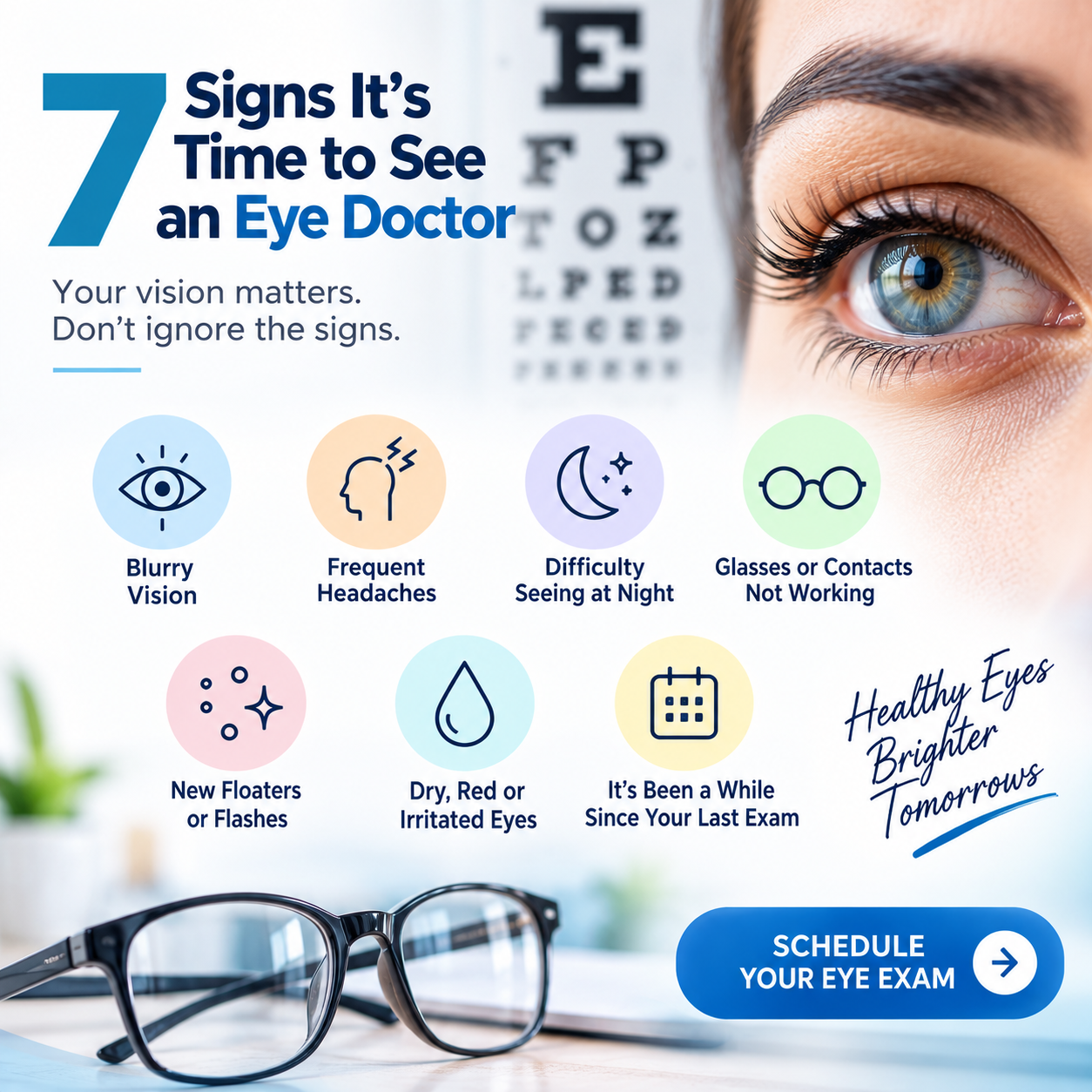
If your vision has become blurry, you need a new prescription, your eyes feel uncomfortable, or it has simply been a while since your last eye exam, you may start searching online for an “eye doctor near me.”
But then another question often comes up:
Should I see an eye doctor or an optometrist? And what exactly is the difference?
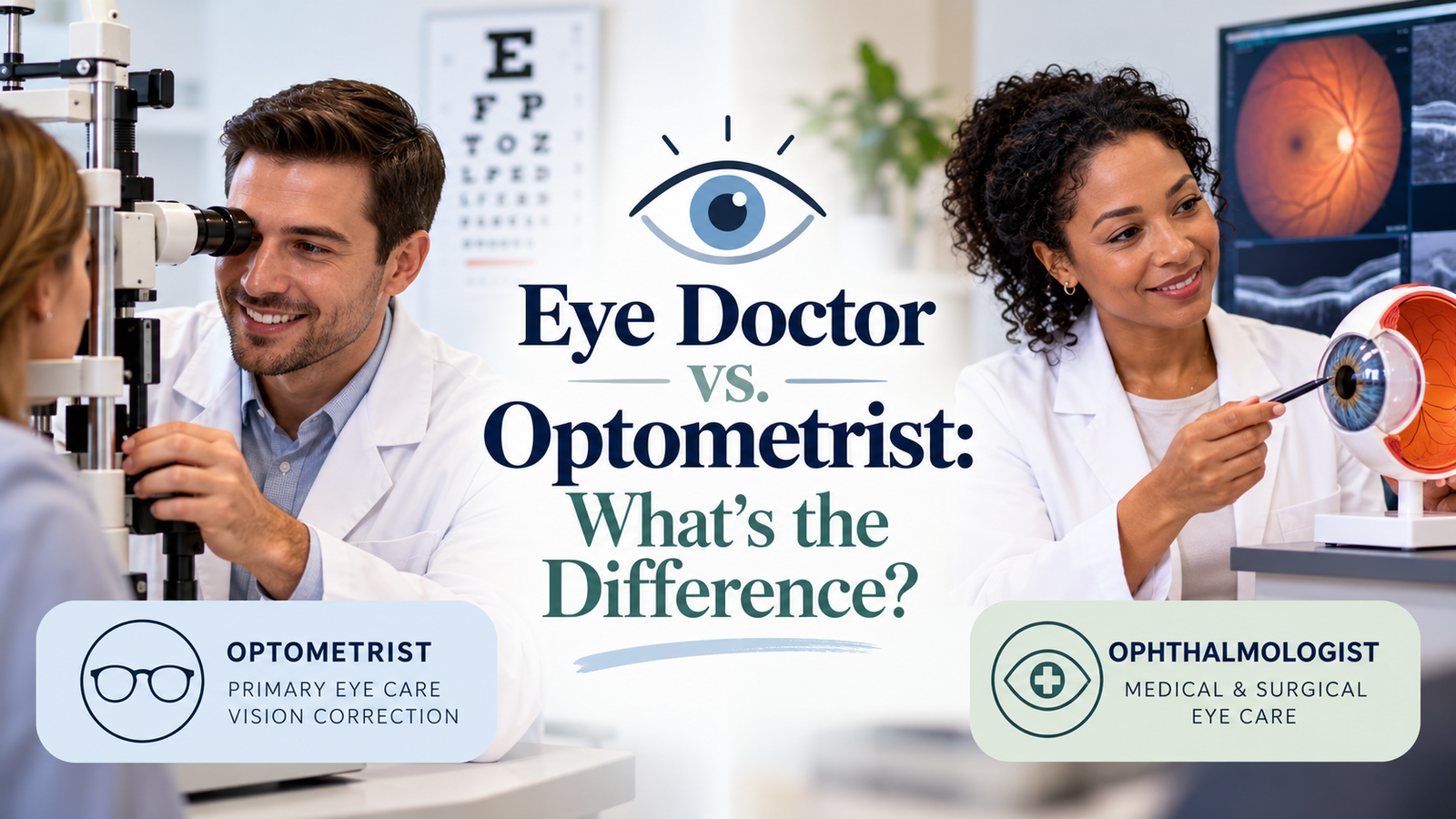
The answer is simpler than it may seem. “Eye doctor” is a general term commonly used for professionals who provide eye care. An optometrist is one type of eye doctor. An ophthalmologist is another.
Both play important roles in protecting your vision, but their education, training, and scope of practice differ.
Understanding these differences can help you choose the right eye care professional for your needs.
What Is an Eye Doctor?
The phrase “eye doctor” isn’t one specific professional designation.
People commonly use it to describe either an optometrist (OD) or an ophthalmologist (MD or DO).
Both evaluate the eyes and vision, but they have different training and may provide different levels of treatment.
For routine vision care, comprehensive eye exams, glasses, contact lenses, and many common eye-health concerns, an optometrist is often the primary eye care provider.
For eye surgery and certain complex or advanced eye diseases, an ophthalmologist may be required.
What Is an Optometrist?
An optometrist is a healthcare professional who earns a Doctor of Optometry (OD) degree and is licensed to practice optometry.
Optometrists serve an important role in primary eye care. Their work includes examining the eyes, evaluating vision, prescribing corrective lenses, and diagnosing and managing eye and visual-system conditions within their state-authorized scope of practice.
What Does an Optometrist Do?
Depending on the patient’s needs and applicable scope of practice, an optometrist may provide:
- Comprehensive eye exams
- Vision testing
- Eyeglass prescriptions
- Contact lens evaluations and prescriptions
- Medical eye evaluations
- Monitoring of eye health
- Diagnosis and management of many common eye conditions
- Dry-eye evaluation
- Digital eye strain care
- Vision correction
- Pre- and post-surgical eye care
- Referrals to ophthalmologists or other specialists when necessary
This combination of vision care and eye-health evaluation is one reason many people begin with an optometrist when scheduling a routine eye examination.
What Is an Ophthalmologist?
An ophthalmologist is a physician who holds an MD (Doctor of Medicine) or DO (Doctor of Osteopathic Medicine) degree and specializes in medical and surgical eye care.
Ophthalmologists complete medical school followed by specialized residency training in ophthalmology. They diagnose and treat eye diseases, prescribe medications and corrective lenses, and perform eye surgery. Some pursue additional fellowship training in areas such as retina, glaucoma, cornea, pediatric ophthalmology, or oculoplastic surgery.
For example, a patient who requires cataract surgery, retinal surgery, or another surgical eye procedure would generally be treated by an ophthalmologist.
Optometrist vs. Ophthalmologist: What’s the Difference?
The biggest differences involve education, medical training, scope of practice, and surgery.
An optometrist (OD) provides primary eye and vision care. Optometrists perform comprehensive eye examinations, prescribe glasses and contact lenses, and diagnose and manage eye conditions within the scope allowed by their state.
An ophthalmologist (MD or DO) is a physician specializing in eye and vision care who can provide medical and surgical treatment, including eye surgery
The two professions frequently work together.
An optometrist may identify a condition during a comprehensive eye examination and refer the patient to an ophthalmologist when specialized medical or surgical care is appropriate. After surgery, optometrists may also participate in ongoing or post-operative eye care.
What About an Optician?
An optician has a different role.
Opticians help prepare, fit, and dispense eyeglasses and other vision-correction devices based on prescriptions provided by an optometrist or ophthalmologist.
An optician does not perform comprehensive eye examinations, diagnose eye diseases, or write prescriptions for vision correction.
So if you are experiencing blurry vision or need your prescription checked, you should schedule an examination with an optometrist or ophthalmologist rather than simply visiting an optician.
When Should You See an Optometrist?
An optometrist is an appropriate starting point for many everyday eye and vision needs.
Consider scheduling a comprehensive eye exam if:
- Your vision has become blurry
- You are having difficulty seeing at night
- You experience frequent eye strain
- Your current glasses no longer seem strong enough
- You need a new eyeglass prescription
- You wear contact lenses
- You are interested in contact lenses
- Your eyes frequently feel dry or irritated
- You spend long hours using computers or digital devices
- You have noticed changes in your vision
- It has been a long time since your last eye examination
Regular eye examinations aren’t only about determining whether you need glasses.
They also give your eye doctor an opportunity to evaluate your overall eye health and identify changes that may require monitoring, treatment, or referral.
Do I Need an Eye Exam If I Can See Clearly?
Clear vision does not necessarily mean that every aspect of your eye health is normal.
Some eye conditions can develop before a person notices obvious symptoms. The American Academy of Ophthalmology notes that certain eye diseases may initially produce little or no noticeable vision change, making professional examinations an important component of eye care.
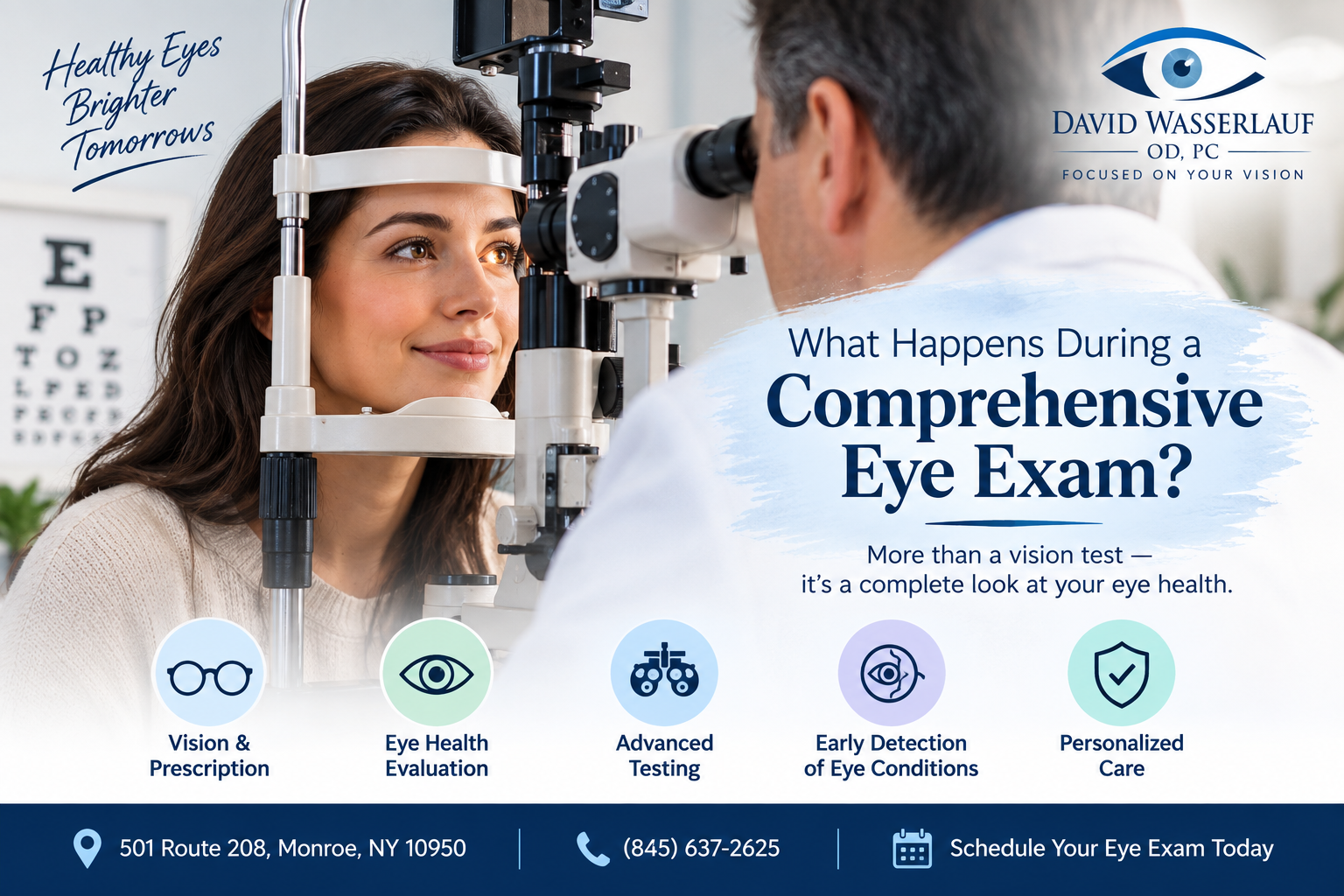
A comprehensive eye exam can evaluate much more than your ability to read letters on an eye chart.
Depending on your needs, an examination may include evaluation of your visual acuity, refractive error, eye coordination, focusing ability, eye pressure, and the health of different structures of the eye.
The specific tests performed depend on your age, symptoms, medical history, eye history, and clinical findings.
When Should You See an Ophthalmologist?
An ophthalmologist may be needed when a condition requires specialized medical or surgical care.
Examples can include complex eye disease, conditions requiring surgery, significant retinal problems, advanced glaucoma, or other cases that require physician-level medical or surgical management.
Optometrists and ophthalmologists often work together, so you don’t necessarily need to determine the specialist yourself.
If your optometrist discovers something requiring ophthalmologist care, you can be referred to the appropriate specialist.
What About Sudden Vision Changes?
Some eye symptoms should not wait for a routine appointment.
Seek prompt professional evaluation for symptoms such as:
- Sudden loss of vision
- Sudden significant decrease in vision
- New flashes of light
- A sudden increase in floaters
- A curtain, shadow, or dark area across your vision
- Significant eye injury
- Severe eye pain
- Sudden double vision
- Sudden redness accompanied by significant pain or vision changes
These symptoms can sometimes be associated with conditions requiring urgent medical attention.
Eye Doctor for Glasses and Contact Lenses
If your main concern is glasses or contact lenses, an optometrist is a natural place to start.
During an eye examination, your optometrist can determine whether you have common refractive errors such as:
Myopia (nearsightedness) — distant objects appear blurry.
Hyperopia (farsightedness) — near vision may be more difficult.
Astigmatism — irregular focusing can cause blurred or distorted vision.
Presbyopia — age-related changes make focusing at close distances increasingly difficult.
After evaluating your vision, your optometrist can prescribe appropriate eyeglasses or contact lenses.
Eye Doctor for Contact Lenses
Contact lenses require more than simply transferring an eyeglass prescription to a contact lens.
Your eye doctor may evaluate the shape and health of your eyes, discuss your lifestyle and visual needs, and determine an appropriate lens type and fit.
Some patients may benefit from specialized contact lenses, particularly when conventional lenses don’t provide satisfactory comfort or vision.
If you’re searching for a contact lens eye doctor in Monroe, NY, choosing an optometrist who provides both comprehensive eye examinations and specialized contact lens services can simplify your ongoing vision care.
Medical Eye Care vs. Routine Vision Care
Another common misconception is that optometrists only prescribe glasses.
Optometrists are trained eye-health professionals. Their scope includes examining and diagnosing eye and visual-system disorders and providing treatment or management within applicable state law.
That means an eye examination can include both vision correction and eye-health evaluation.
When a problem falls outside an optometrist’s scope or requires surgery or subspecialty care, the patient can be referred to an ophthalmologist.
This coordinated approach allows different members of the eye-care team to contribute according to their expertise.
Eye Exams for Adults
Your vision can change throughout adulthood.
Changes may be gradual enough that you don’t immediately notice them. Reading may become more difficult, nighttime driving may feel different, or you may experience more eye fatigue after working on a computer.
Regular eye exams provide an opportunity to identify these changes and update your vision correction when appropriate.
Eye examinations can become particularly important for people with medical conditions or other risk factors that may affect eye health.
Your eye doctor can recommend an examination schedule based on your individual age, history, symptoms, risk factors, and clinical findings.
Digital Eye Strain and Your Eye Doctor
Computers, smartphones, tablets, and other digital devices are a major part of modern life.
Extended screen use can be associated with symptoms such as:
- Tired eyes
- Dryness
- Temporary blurred vision
- Difficulty focusing
- Headaches
- Eye discomfort
If these symptoms occur frequently, an eye examination can help determine whether an uncorrected vision problem, dry eye, focusing issue, or another factor may be contributing.
An optometrist can also discuss practical strategies for improving visual comfort during prolonged screen use.
How Do I Choose the Right Eye Doctor Near Me?
When searching for an “eye doctor near me” or “optometrist near me,” look beyond convenience alone.
Consider whether the practice provides:
- Comprehensive eye exams
- Eyeglasses and vision correction
- Contact lens services
- Medical eye care
- Specialized contact lenses
- Digital eye strain evaluation
- Pre- and post-surgical care
- Ongoing eye-health monitoring
You should also feel comfortable asking questions about your vision and understanding your treatment options.
The right eye doctor should help you understand what they see, what it means, and what your next step should be.
Looking for an Eye Doctor in Monroe, NY?
If you’re searching for an Eye Doctor in Monroe, NY, or an optometrist in Monroe, NY, David Wasserlauf OD PC provides optometric eye care in Monroe.
The practice is located at 501 Route 208, Monroe, NY 10950, and offers eye and vision care including comprehensive eye exams, vision correction, contact lens services, medical eye care, specialized contact lenses, digital eye strain support, and pre- and post-surgical eye care.
Whether you need a routine eye exam in Monroe, NY, have noticed changes in your vision, need new glasses or contact lenses, or have questions about your eye health, scheduling an examination with an optometrist can be an appropriate first step.
Frequently Asked Questions
Is an optometrist an eye doctor?
Yes. “Eye doctor” is commonly used as a broad term that includes optometrists and ophthalmologists. An optometrist earns a Doctor of Optometry (OD) degree and provides primary eye and vision care.
What’s the difference between an optometrist and an ophthalmologist?
An optometrist is an OD who provides primary vision and eye care. An ophthalmologist is an MD or DO specializing in medical and surgical eye care and can perform eye surgery.
Should I see an optometrist for an eye exam?
For routine comprehensive eye exams, vision testing, glasses, contact lenses, and many common eye-health concerns, an optometrist is an appropriate choice.
Can an optometrist diagnose eye problems?
Yes. Optometrists are licensed eye-health professionals trained to examine, diagnose, treat, and manage diseases and disorders of the eye and visual system within their state-authorized scope of practice.
Can an optometrist perform eye surgery?
Scope varies by state, but ophthalmologists are the eye physicians specifically trained in medical and surgical eye care. When surgery or advanced specialty care is needed, patients may be referred to an ophthalmologist.
Where can I find an optometrist in Monroe, NY?
David Wasserlauf OD, PC provides optometric care at 501 Route 208, Monroe, NY 10950.
Your Vision Deserves the Right Eye Care
The difference between an eye doctor and an optometrist doesn’t need to be confusing.
Eye doctor is a broad term. An optometrist is a Doctor of Optometry who provides primary eye and vision care, while an ophthalmologist is a medical physician specializing in medical and surgical eye care.
For many routine vision and eye-health needs, your optometrist can be your first point of care—and can coordinate a referral when specialized ophthalmologist treatment is necessary.
If you’re due for an examination or have noticed a change in your vision, schedule a comprehensive eye exam in Monroe, NY.
Author: Michael Clarke