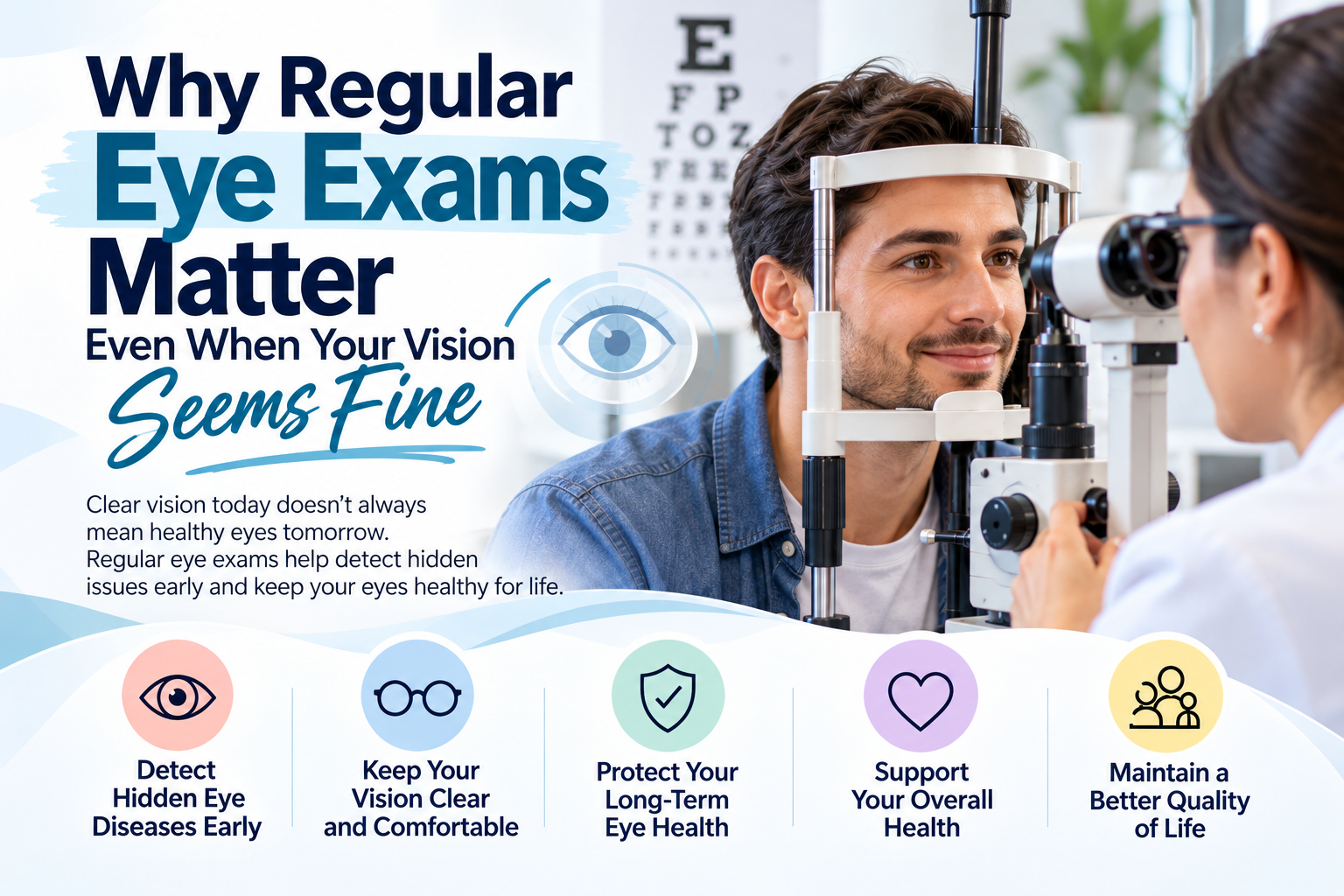
Many people believe they only need an eye exam when they experience blurry vision, headaches, or difficulty reading. However, good eyesight does not always mean healthy eyes. Certain eye diseases can develop gradually without noticeable symptoms, making regular comprehensive eye exams essential for protecting your vision and long-term eye health.
Whether you’re reading comfortably, driving without glasses, or spending hours on digital devices without obvious problems, routine eye examinations can identify potential concerns before they affect your daily life.
Regular eye exams are not just about updating your prescription. They are an important part of preventive healthcare.
In this guide, we’ll explain why regular eye exams matter, what conditions they can detect, how often you should schedule an appointment, and how preventive eye care can help preserve healthy vision.
1. Good Vision Doesn’t Always Mean Healthy Eyes
One of the biggest misconceptions about eye health is that people with clear vision don’t need regular eye examinations.
The truth is that several serious eye conditions can develop without causing obvious changes in vision during their early stages.
For example, glaucoma can gradually damage the optic nerve, sometimes without noticeable symptoms until significant vision loss has occurred. Similarly, diabetic retinopathy may develop before a person experiences changes in eyesight.
A comprehensive eye exam allows an optometrist to assess more than how clearly you see. It can also evaluate the health of your retina, optic nerve, eye pressure, and other important structures.
Key takeaway:** You can have 20/20 vision and still have an eye condition that requires medical attention.
2. Early Detection of Eye Diseases Can Help Protect Your Vision
One of the most important benefits of regular eye exams is the early identification of potentially serious eye conditions.
Many eye diseases are easier to manage when detected early.
Glaucoma
Glaucoma is a group of eye diseases that can damage the optic nerve and lead to irreversible vision loss.
Because some forms develop without early warning signs, comprehensive eye exams are important for identifying suspicious changes and determining whether additional testing is needed.
Cataracts
Cataracts occur when the eye’s natural lens becomes cloudy, often developing gradually with age.
An eye examination can identify early lens changes and help determine when monitoring, updated glasses, or treatment may be appropriate.
Age-Related Macular Degeneration (AMD)
Age-related macular degeneration affects the macula, the part of the retina responsible for sharp central vision.
Routine retinal evaluations can help identify changes associated with AMD and support timely referral or management.
Diabetic Retinopathy
Diabetes can damage small blood vessels in the retina.
People with diabetes may develop retinal changes before noticing any vision problems. Regular dilated eye examinations are particularly important for monitoring diabetic eye disease.
Other Eye Conditions
Comprehensive eye exams may also identify signs of:
– Retinal abnormalities
– Dry eye disease
– Corneal disorders
– Eye inflammation
– Changes associated with high blood pressure
– Other conditions affecting eye health
Early identification does not guarantee that vision loss can be prevented, but it often creates more opportunities for timely treatment and management.
3. Eye Exams Can Reveal Signs of Other Health Conditions
Your eyes can provide valuable information about your overall health.
During a comprehensive eye examination, an eye doctor may observe changes in the retina, blood vessels, or optic nerve that suggest underlying health concerns.
These findings can sometimes be associated with:
Diabetes: Damage to retinal blood vessels may indicate diabetic eye disease.
High Blood Pressure: Certain retinal blood vessel changes can be associated with hypertension.
High Cholesterol: Some visible changes in or around the eyes may be associated with cholesterol-related conditions.
Autoimmune and Inflammatory Disorders: Certain conditions can cause eye inflammation, dryness, or other ocular symptoms.
An eye examination cannot replace a complete medical evaluation. However, unusual findings may prompt your eye doctor to recommend additional testing or consultation with another healthcare professional.
4. Your Vision Can Change Gradually Without You Noticing
Vision changes don’t always happen suddenly.
Small changes in nearsightedness, farsightedness, astigmatism, or focusing ability may develop gradually.
Because the brain adapts to these changes, you may not immediately realize that your eyesight is no longer as sharp or comfortable as it could be.
Common signs of subtle vision changes include:
– Squinting to read signs
– Difficulty focusing on small text
– Eye fatigue after reading
– Frequent headaches
– Trouble seeing clearly at night
– Holding reading materials farther away
– Difficulty switching focus between near and distant objects
Regular eye exams help ensure that your vision correction remains appropriate for your needs.
Even if you don’t currently wear glasses or contact lenses, a routine evaluation can establish a baseline for future comparisons.
5. Digital Eye Strain Is Becoming More Common
Computers, smartphones, tablets, and other digital devices are an essential part of modern life.
However, prolonged screen use can contribute to digital eye strain, sometimes called computer vision syndrome.
Symptoms may include:
– Dry or irritated eyes
– Blurred vision
– Headaches
– Eye fatigue
– Difficulty focusing
– Neck and shoulder discomfort
Digital eye strain can occur even when your distance vision is normal.
During an eye exam, your optometrist can assess whether uncorrected vision problems, focusing difficulties, dry eye, or other factors may be contributing to discomfort.
Simple Tips to Reduce Digital Eye Strain
Follow the 20-20-20 rule: Every 20 minutes, look at something approximately 20 feet away for at least 20 seconds.
Blink regularly: Blinking helps maintain moisture on the eye’s surface
Adjust screen positioning: Keep your screen at a comfortable distance and slightly below eye level.
Reduce glare: Adjust room lighting and screen brightness.
Schedule an eye examination: Persistent discomfort should be evaluated by an eye care professional.
6. Regular Eye Exams Are Important for Children
Children may not recognize or communicate vision problems.
A child with blurred vision may assume everyone sees the world the same way.
Undetected vision difficulties can affect reading, classroom participation, concentration, and certain learning activities.
Regular pediatric vision screenings and comprehensive eye examinations when indicated can help identify:
– Nearsightedness
– Farsightedness
– Astigmatism
– Lazy eye (amblyopia)
– Eye alignment problems (strabismus)
– Other visual development concerns
Parents should not rely only on a child’s ability to read or recognize objects to determine whether their eyes are healthy.
If a child frequently squints, holds books unusually close, complains of headaches, or struggles with visual tasks, an eye examination may be appropriate.
7. Aging Increases the Importance of Preventive Eye Care
As we age, our eyes naturally undergo changes.
Adults over 40 may begin experiencing presbyopia, a gradual reduction in the ability to focus on nearby objects.
The risk of certain eye diseases also increases with age, including cataracts, glaucoma, and age-related macular degeneration.
Regular eye exams can help monitor these changes and identify conditions that may require additional attention.
For older adults, protecting vision is especially important for maintaining independence, mobility, and quality of life.
8. Contact Lens Wearers Need Regular Eye Examinations
Contact lenses offer convenience and flexibility, but they also require appropriate eye care.
Even if your contact lenses feel comfortable and your vision seems clear, regular examinations are important.
Your eye doctor can evaluate:
– Contact lens fit
– Corneal health
– Tear film quality
– Signs of irritation or inflammation
– Prescription changes
– Potential complications associated with lens wear
Poor contact lens hygiene or improper use can increase the risk of eye infections, including serious corneal infections.
Following your eye doctor’s recommended examination schedule and lens care instructions can help reduce these risks.
9. What Happens During a Comprehensive Eye Exam?
A comprehensive eye examination evaluates both vision and eye health.
Depending on your age, symptoms, medical history, and clinical needs, an examination may include:
Visual Acuity Testing
Measures how clearly you see at different distances.
Refraction Assessment
Determines whether glasses or contact lenses are needed and evaluates your prescription.
Eye Movement and Alignment Testing
Checks how well your eyes move and work together.
Eye Pressure Measurement
Measures intraocular pressure, an important part of evaluating glaucoma risk.
Slit-Lamp Examination
Allows your eye doctor to examine structures at the front of your eye, including the cornea, iris, and lens.
Retinal and Optic Nerve Evaluation
Examines structures at the back of the eye for signs of disease.
Pupil Dilation When Needed
Dilating drops allow a more detailed examination of internal eye structures.
Your optometrist may recommend additional testing depending on the examination findings.
10. How Often Should You Have an Eye Exam?
The appropriate frequency of comprehensive eye examinations depends on your age, medical history, risk factors, symptoms, and your eye doctor’s recommendations.
The American Optometric Association’s adult eye examination guidance recommends:
Age Group | General Examination Guidance
| 18–39 years | At least every two years for asymptomatic, low-risk adults |
| 40–64 years | At least every two years for asymptomatic, low-risk adults |
| 65 years and older | Annually |
| Higher-risk individuals | More frequently, as recommended by an eye doctor |
People with diabetes, existing eye disease, significant family history, certain medications, or other risk factors may need more frequent examinations.
Children follow different examination and screening recommendations based on age and risk.
Important: These are general recommendations, not a substitute for an individualized examination schedule.
11. Signs You Should Schedule an Eye Exam Sooner
Even if your last examination was recent, certain symptoms deserve professional attention.
Schedule an eye examination if you experience:
– Frequent headaches associated with visual activities
– Persistent blurry vision
– Eye discomfort or dryness
– Difficulty seeing at night
– Double vision
– Frequent squinting
– Unexplained changes in visual clarity
Seek urgent medical attention for sudden vision loss, new flashes of light accompanied by floaters or a shadow across your vision, severe eye pain, or sudden significant changes in eyesight. These symptoms can indicate conditions requiring prompt evaluation.
12. Benefits of Regular Eye Exams
Routine comprehensive eye exams provide several important advantages:
Early Disease Detection: Identify potential eye conditions before noticeable symptoms develop.
Better Vision Correction: Keep eyeglass and contact lens prescriptions appropriate.
Preventive Eye Care: Monitor changes in eye health over time.
Improved Daily Comfort: Address visual fatigue, dry eyes, and focusing difficulties.
Long-Term Vision Protection: Support timely management of conditions that may threaten eyesight.
Better Quality of Life: Maintain visual comfort and function for reading, driving, working, and daily activities.
Regular eye examinations are an investment in both immediate visual comfort and long-term eye health.
Frequently Asked Questions About Regular Eye Exams
Do I need an eye exam if I have 20/20 vision?
Yes. Having 20/20 vision does not guarantee that your eyes are free from disease. A comprehensive eye examination evaluates eye health in addition to visual clarity.
Can eye diseases develop without symptoms?
Yes. Some conditions, including certain forms of glaucoma and early diabetic retinopathy, may develop without noticeable symptoms.
Are routine eye exams painful?
Most routine eye examination procedures are painless. Some tests or dilating drops may cause temporary discomfort, light sensitivity, or blurred near vision.
Can an eye exam detect diabetes?
An eye examination may reveal retinal changes associated with diabetes, but it cannot independently diagnose diabetes. Additional medical testing is needed.
Is an online vision test a replacement for a comprehensive eye exam?
No. Online vision tests may assess limited aspects of visual acuity but cannot provide a comprehensive evaluation of eye health.
Should I get an eye exam if I don’t wear glasses?
Yes. Routine eye care is important for people who do not need glasses or contact lenses because eye health problems may occur independently of refractive errors.
How long does a comprehensive eye exam take?
Many routine appointments take approximately 30–60 minutes, although the duration varies depending on testing, dilation, and individual needs.
Protect Your Vision Before Problems Begin
Author: Michael Clarke