A comprehensive eye exam is one of the most important steps you can take to protect your vision and maintain healthy eyes. Whether you’re experiencing blurry vision, headaches, digital eye strain, or simply need a routine checkup, visiting an experienced optometrist can help identify vision problems and potential eye health concerns.
At David Wasserlauf OD, PC, we provide comprehensive eye exams in Monroe, NY, helping patients understand their vision, monitor their eye health, and receive personalized recommendations for their needs.
But what actually happens during a comprehensive eye exam? How long does it take, what tests are performed, and how often should you schedule one?
This guide explains what to expect during your next eye exam.
What Is a Comprehensive Eye Exam?
A comprehensive eye exam is a detailed evaluation of your vision and overall eye health performed by an optometrist or ophthalmologist.
Unlike a basic vision screening, which primarily checks how clearly you can see, a comprehensive eye exam evaluates multiple aspects of your visual system.
These may include:
– Visual acuity and clarity
– Prescription for glasses or contact lenses
– Eye focusing and coordination
– Eye movements and alignment
– Eye pressure
– Corneal and lens health
– Retina and optic nerve health
– Signs of certain eye diseases
Some eye conditions can develop without noticeable symptoms in their early stages. Regular eye examinations can help detect changes before they significantly affect your vision.
1. Review of Your Medical and Eye Health History
Your comprehensive eye exam usually begins with a discussion about your medical history, vision concerns, and lifestyle.
Your eye doctor may ask questions such as:
– Are you experiencing blurry or double vision?
– Do you have frequent headaches or eye strain?
– Do you currently wear glasses or contact lenses?
– Have you noticed changes in your vision?
– Do you have diabetes, high blood pressure, or other chronic conditions?
– Does your family have a history of glaucoma or other eye diseases?
– How much time do you spend using computers or digital devices?
Your answers help your optometrist determine which tests may be appropriate and identify potential risk factors.
For example, patients with diabetes may need additional attention to retinal health because diabetes can affect blood vessels in the eyes.
2. Visual Acuity Testing: How Clearly Can You See?
One of the most familiar parts of an eye exam is the visual acuity test.
During this test, you’ll typically read letters or symbols from an eye chart at a specified distance.
The purpose is to determine how clearly you can see with each eye.
What does 20/20 vision mean?
20/20 vision means you can see at 20 feet what a person with standard visual acuity is expected to see at that distance.
However, 20/20 vision does not necessarily mean your eyes are completely healthy.
A person may have excellent visual acuity while still having an eye condition that requires evaluation or monitoring.
3. Refraction Testing: Do You Need Glasses or Contact Lenses?
Refraction testing helps determine whether you have a refractive error and what prescription may provide clearer vision.
Your optometrist may use an instrument called a phoropter and ask which lenses make letters appear clearer.
You may hear questions such as:
“Which is better, number one or number two?”
This process helps evaluate common vision conditions, including:
Nearsightedness (Myopia): Distant objects appear blurry, while nearby objects may remain clear.
Farsightedness (Hyperopia): Near vision may require additional focusing effort, although symptoms vary.
Astigmatism: Irregular curvature of the cornea or lens can cause blurry or distorted vision.
Presbyopia: Age-related changes in near focusing ability commonly become noticeable during middle age.
If you need vision correction, your eye doctor can discuss suitable glasses or contact lens options.
A contact lens fitting may require additional measurements and evaluation beyond a routine glasses prescription.
4. Eye Movement, Focusing, and Coordination Tests
Your eyes need to work together to provide comfortable and effective vision.
During a comprehensive eye exam, your optometrist may evaluate how well your eyes move, focus, and coordinate.
These tests can help identify issues related to:
– Eye alignment
– Eye muscle function
– Binocular vision
– Focusing ability
– Certain causes of double vision
– Visual discomfort during reading or computer use
Patients who experience headaches, difficulty concentrating while reading, or persistent eye strain may benefit from an evaluation of these visual functions.
5. Eye Pressure Testing: Screening for Glaucoma Risk
Eye pressure testing, also called tonometry, measures intraocular pressure.
Elevated eye pressure is an important risk factor for glaucoma, a group of eye diseases that can damage the optic nerve.
However, glaucoma can also occur in people whose eye pressure is within the normal range.
Your optometrist may use an air-puff device or another instrument to measure eye pressure.
An eye pressure measurement alone cannot confirm or rule out glaucoma. Your eye doctor may also examine the optic nerve and recommend additional testing based on your findings and risk factors.
6. Slit-Lamp Examination: Checking the Front of Your Eyes
A slit lamp is a specialized microscope that allows your eye doctor to examine the structures of your eyes under magnification.
During this examination, you’ll typically rest your chin and forehead against a support while the doctor directs a narrow beam of light toward your eye.
The examination may include evaluation of your:
– Eyelids and eyelashes
– Conjunctiva
– Cornea
– Tear film
– Iris
– Natural lens
This can help your eye doctor identify signs of dry eye, cataracts, inflammation, and other conditions affecting the front of the eye.
The test is generally quick and does not usually cause significant discomfort.
7. Retinal Examination: Looking at the Back of Your Eyes
The retina is the light-sensitive tissue at the back of your eye that helps convert light into signals interpreted by your brain.
During a retinal examination, your optometrist may assess:
– Retina
– Optic nerve
– Macula
– Retinal blood vessels
– Other structures inside the eye
Depending on your needs, the examination may include dilating eye drops, retinal photography, or additional imaging.
Why are dilating eye drops sometimes used?
Dilating drops enlarge the pupils, allowing your eye doctor to obtain a wider view of the structures inside your eyes.
After dilation, you may experience temporary blurred near vision and sensitivity to bright light.
Your doctor can advise whether dilation is recommended and what precautions you should take afterward.
Retinal examinations can be especially important for patients with risk factors such as diabetes, high blood pressure, or a family history of certain eye diseases.
8. Additional Eye Tests When Necessary
Not every patient requires every diagnostic test.
Your optometrist may recommend additional testing based on your age, symptoms, medical history, and examination findings.
Additional test What it evaluates
Retinal photography Images of the retina and optic nerve
Optical coherence tomography (OCT) Detailed cross-sectional images of retinal structures
Visual field testing Central and peripheral visual function
Corneal topography Shape and curvature of the cornea
Dry eye evaluation Tear film and ocular surface health
Contact lens fitting Lens fit, comfort, vision, and ocular compatibility
These tests may help your eye doctor investigate particular concerns or monitor known conditions.
9. Personalized Recommendations and Treatment Planning
At the end of your comprehensive eye exam, your optometrist will review relevant findings and discuss the next steps.
Depending on the results, recommendations may include:
– Updating your glasses prescription
– Evaluating contact lens options
– Managing dry eye symptoms
– Monitoring an eye condition
– Scheduling follow-up testing
– Coordinating care with another healthcare professional
– Referring you to an ophthalmologist when specialized medical or surgical care is needed
The goal is not simply to determine whether you need glasses. It is to understand your vision and overall eye health.
How Long Does a Comprehensive Eye Exam Take?
A comprehensive eye exam often takes approximately 30–60 minutes, although the actual duration varies.
Factors that may affect appointment length include your medical history, the tests performed, whether pupil dilation is needed, and whether you require additional diagnostic testing or a contact lens evaluation.
When scheduling, ask the practice how much time to allow for your appointment.
How Often Should You Get a Comprehensive Eye Exam?
The ideal examination schedule depends on your age, vision, medical history, symptoms, and eye health risk factors.
Some adults may benefit from examinations every one to two years, while others need more frequent visits.
Patients with diabetes, glaucoma, certain medications, significant vision changes, or other risk factors may require individualized monitoring.
Children, adults, and older patients can have different examination needs.
Your optometrist can recommend the appropriate schedule for you.
Signs You Should Schedule an Eye Exam
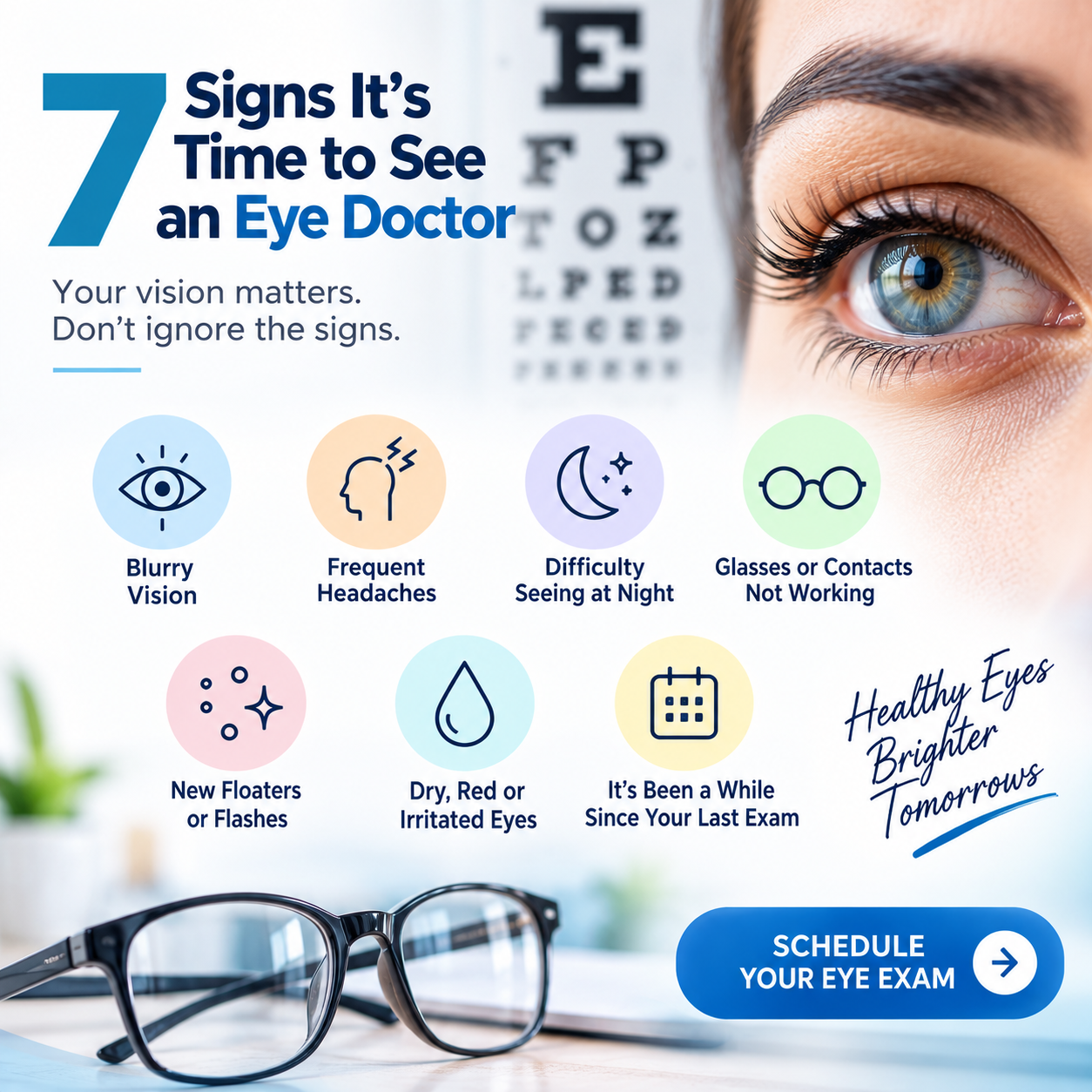
You should consider arranging an eye examination if you notice persistent symptoms such as blurry vision, difficulty reading, frequent headaches associated with visual tasks, eye strain, difficulty seeing at night, or discomfort while wearing contact lenses.
Certain symptoms require more urgent attention. Sudden vision loss, new flashes of light accompanied by many floaters or a curtain-like shadow, severe eye pain, or sudden double vision should be evaluated promptly rather than waiting for a routine appointment.
Comprehensive Eye Exam vs. Vision Screening: What’s the Difference?
A vision screening is a limited assessment designed to identify possible vision problems.
It may be performed in schools, primary care offices, or other settings.
A comprehensive eye exam, by comparison, involves a more detailed evaluation of vision and eye health by an eye care professional.
Vision screening Comprehensive eye exam
Brief assessment Detailed examination
Primarily identifies possible vision concerns Evaluates vision and ocular health
Limited testing Multiple tests based on individual needs
May indicate need for further examination Can support diagnosis, management, and referrals
A vision screening does not replace a comprehensive eye examination when a full evaluation is indicated.
Where Can You Get a Comprehensive Eye Exam in Monroe, NY?
If you’re searching for an eye doctor in Monroe, NY, David Wasserlauf OD, PC provides comprehensive eye care and vision correction services for patients in the area.
Our services include comprehensive eye exams, contact lens evaluations, specialized contact lenses, medical eye care, digital eye strain assessments, and pre- and post-surgical eye care.
Whether you need an updated prescription, have concerns about your vision, or want to maintain your eye health, our practice can help you understand your options.
David Wasserlauf OD, PC — Eyecare & Contact Lenses
501 Route 208, Monroe, NY 10950
Inside Carestier Health
Phone: (845) 637-2625
Schedule Your Comprehensive Eye Exam Today and take a proactive step toward clearer vision and long-term eye health.
Frequently Asked Questions About Comprehensive Eye Exams
Is a comprehensive eye exam painful?
Most routine eye exam procedures are not painful. Some tests may cause brief discomfort or temporary light sensitivity, especially when dilating drops are used.
Do I need an eye exam if I can see clearly?
Yes, clear vision does not necessarily mean your eyes are free from disease. Some eye conditions can develop without obvious early symptoms.
Will my pupils be dilated during an eye exam?
Not always. Your optometrist will determine whether dilation is appropriate based on your individual needs and findings.
Can an eye exam detect glaucoma?
A comprehensive eye exam can identify findings that suggest glaucoma. Additional testing may be needed to diagnose or monitor the condition.
Can I get glasses and contact lenses during the same appointment?
Your eye doctor can discuss both options, but a contact lens fitting is a separate evaluation that may require additional time or an appointment.
Does medical insurance cover comprehensive eye exams?
Coverage depends on the insurance plan and the reason for the visit. Routine vision examinations may fall under vision benefits, while medically necessary evaluations may be covered under medical insurance, subject to plan requirements.
Author: Michael Clarke